
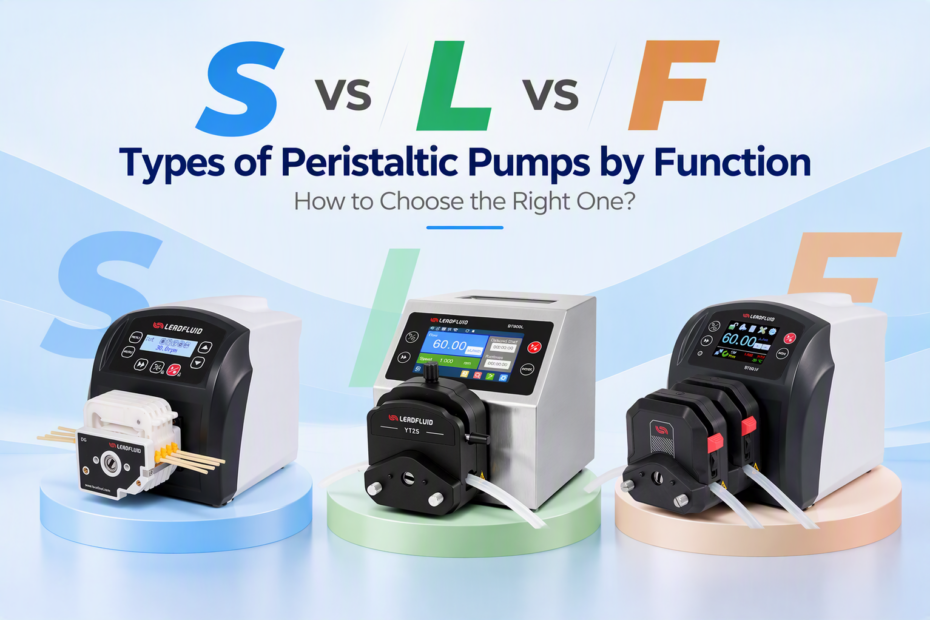
Peristaltic pumps are widely used for transferring, dosing, and dispensing fluids in laboratories and industrial processes. Unlike many conventional pumps, the fluid only contacts the tubing, which makes peristaltic pumps particularly useful when cleanliness, easy maintenance, and fluid isolation are important.
However, not all peristaltic pumps perform the same task. According to their main functions, they can generally be divided into several common types.
Basic Speed-Control Peristaltic Pumps
Speed-control peristaltic pumps are designed primarily for continuous fluid transfer. Users adjust the motor speed to increase or decrease the flow rate, while functions such as start/stop and forward/reverse rotation provide basic control over the pumping process.
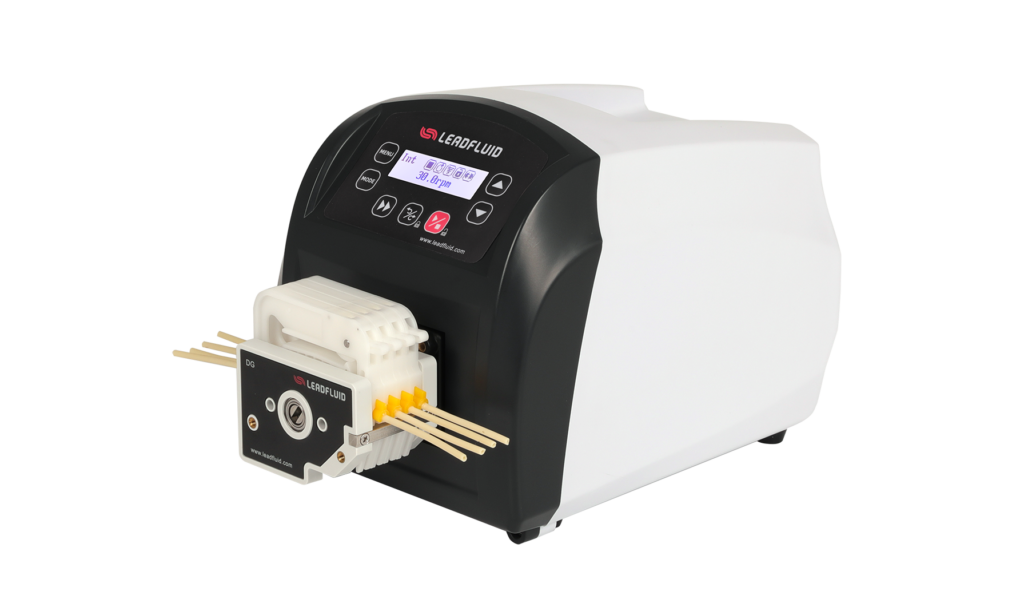
Variable-speed peristaltic pumps are commonly available with adjustable speed and different pump-head or channel configurations.
This type is a practical choice for laboratory experiments, circulation, sampling, and general liquid transfer where sophisticated dosing functions are not required.
Flow-Control Peristaltic Pumps
Flow-control peristaltic pumps focus more directly on the required flow rate. Instead of working mainly with rotational speed, users can set or monitor flow-related parameters according to their process requirements.
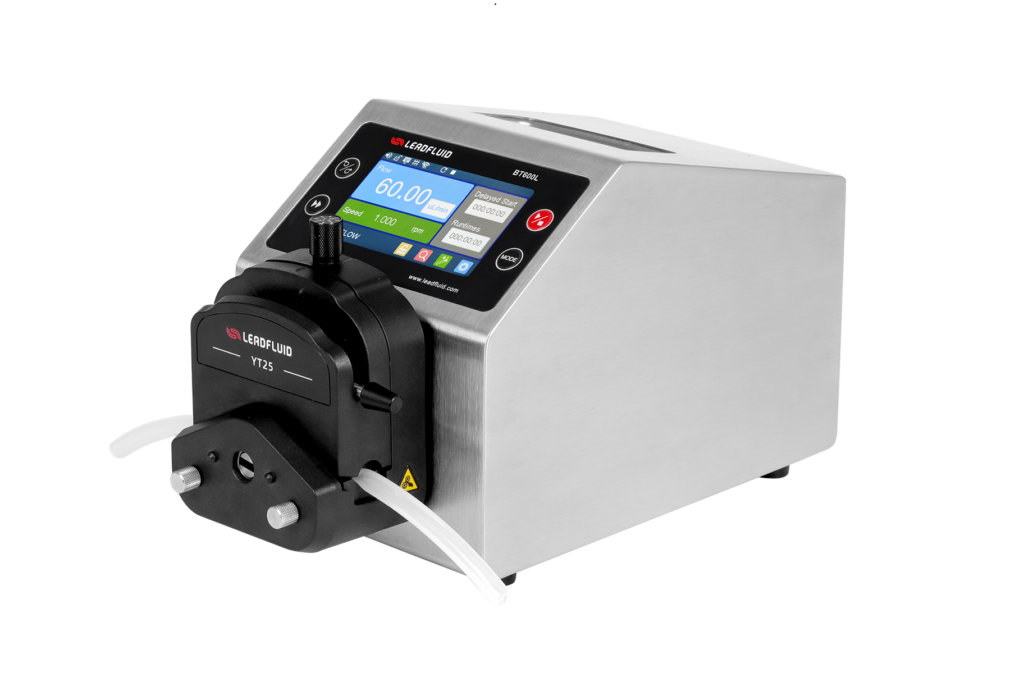
When choosing this type of pump, users should consider the required flow range as well as the pump head and tubing size, since these factors affect the actual liquid delivery.
Dispensing Peristaltic Pumps
Dispensing peristaltic pumps are designed for repeated, quantitative liquid delivery. Depending on the controller, dispensing functions may include timed operation, repeated dispensing cycles, and interval settings. Commercial peristaltic pumps are available with functions such as timed quantitative dispensing and multi-segment dispensing.
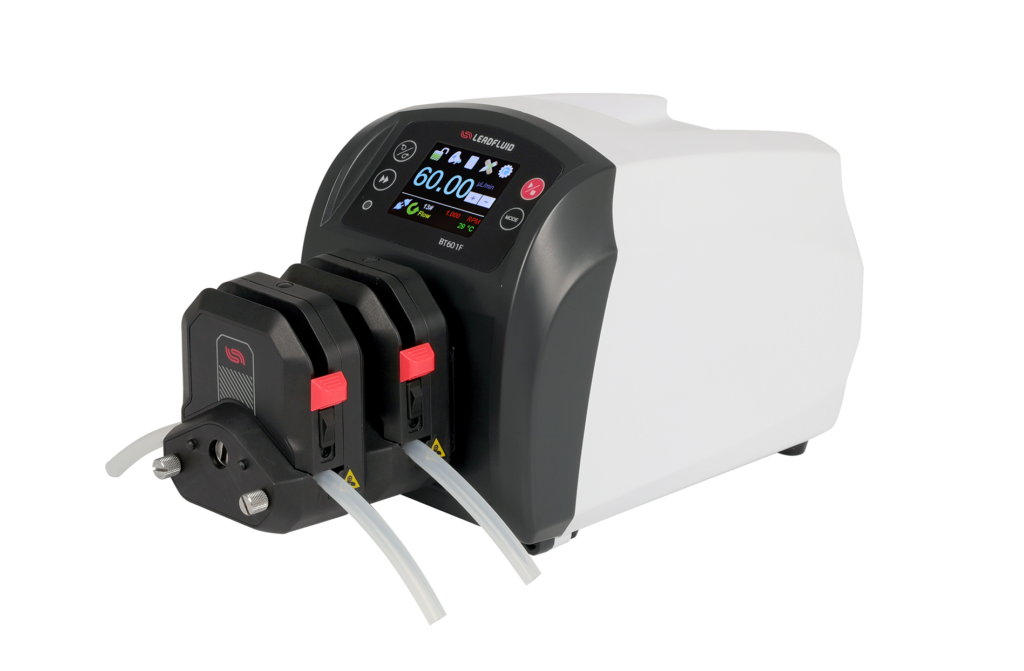
These pumps are particularly useful for reagent dispensing, sample preparation, bottle filling, and other batch-filling processes. Multi-channel filling systems can also be used when several containers need to be filled simultaneously.
OEM Peristaltic Pumps
OEM peristaltic pumps are designed to be integrated into instruments, machines, and automated systems rather than used only as independent benchtop equipment.
Depending on the design, OEM pumps can support external signals or digital communication for speed, direction, and start/stop control. For example, some OEM systems support analog signals and RS485 communication using the Modbus protocol.
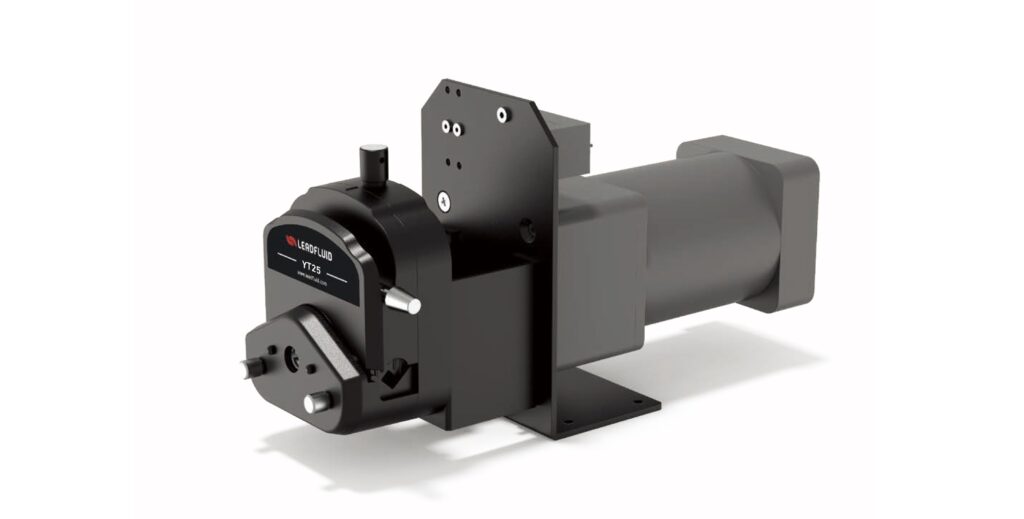
Their compact structure makes them suitable for analytical instruments, medical equipment, filling machines, automation systems, and other equipment requiring integrated fluid handling.
Industrial Peristaltic Pumps
Industrial peristaltic pumps are intended for more demanding operating environments and process applications. Available product categories include high-flow industrial pumps and models designed for applications requiring higher levels of environmental protection.
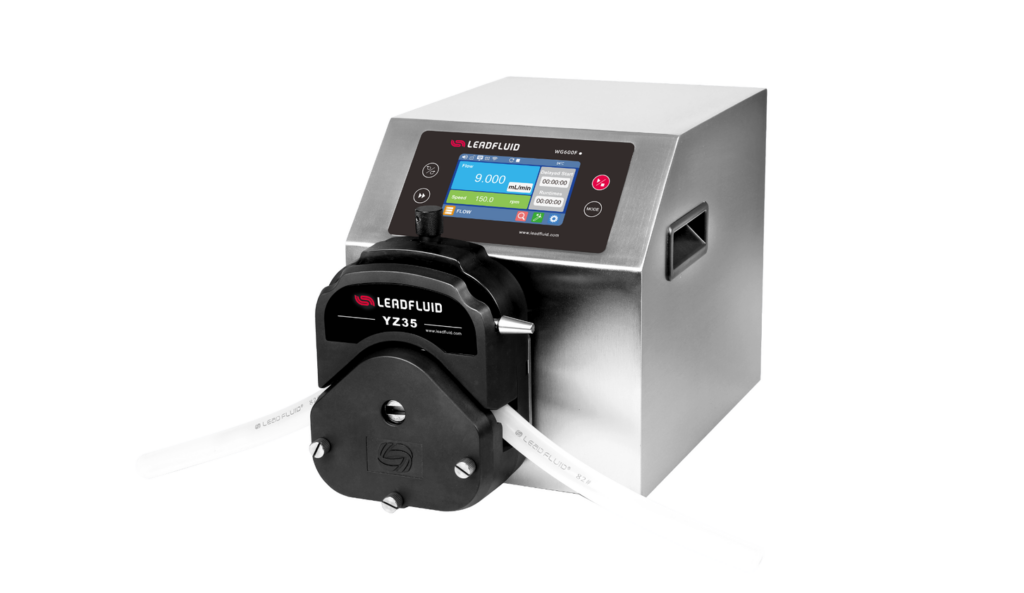
They can be considered for continuous fluid transfer, process dosing, water treatment, chemical processing, and other industrial fluid-handling applications.
How to Select the Right Peristaltic Pump
The best peristaltic pump depends on what you need the pump to accomplish. For straightforward continuous transfer, a speed-control model may be sufficient. For controlled flow delivery, consider a flow-control pump. For repetitive filling, a dispensing pump is usually more suitable, while equipment manufacturers can choose an OEM pump for system integration.
At Lead Fluid, we provide peristaltic pump solutions for laboratory research, fluid transfer, dispensing, OEM integration, and industrial applications. By matching the pump drive, pump head, tubing, flow requirements, and control method, users can build a fluid-handling solution that better fits their specific process.