
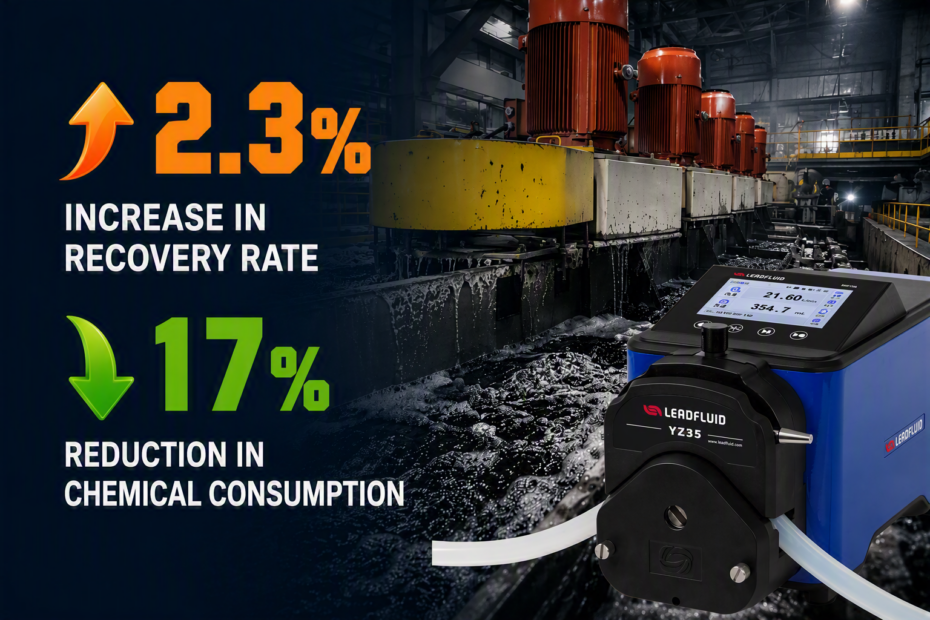
What Does a 2.3% Increase in Recovery Rate Mean for a Mineral Processing Plant?
More metal recovered from the same investment.
In a gold mining project, after optimizing the flotation reagent dosing process and replacing conventional dosing equipment with the Lead Fluid MF106 High-Protection Peristaltic Pump, operating data showed:
Gold recovery rate increased by 2.3%
Reagent consumption reduced by 17%
As declining ore grades and rising mineral processing costs become common challenges across the industry, more mining companies are turning to refined management and process optimization to reduce costs and improve efficiency.
Although seemingly a small part of the overall process, flotation reagent dosing can be an overlooked opportunity for improving operational efficiency.
Flotation Reagent Dosing: A Critical Step Affecting Recovery Rate
Flotation is one of the most widely used separation processes in mineral processing.
By adding reagents such as collectors, frothers, and pH modifiers to the slurry, the surface properties of target minerals are modified, making them more likely to attach to air bubbles and float to the surface, ultimately enabling the separation of valuable minerals from gangue.
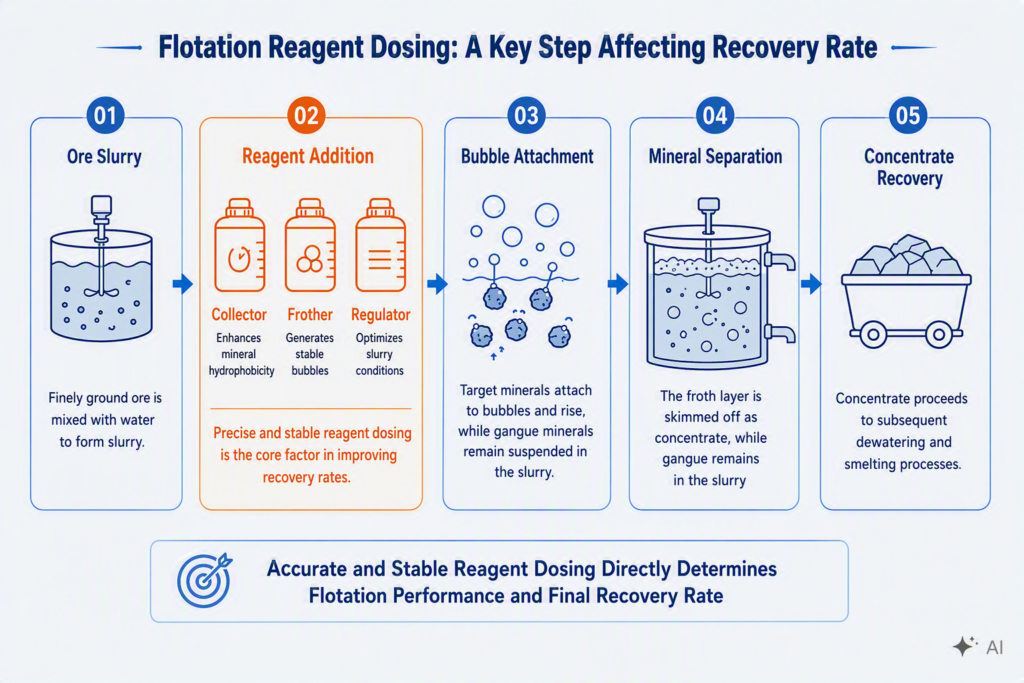
In this process, reagent dosing is not simply a matter of “more is better” or “just add it.”
Insufficient Dosing
Target minerals may not be adequately concentrated, resulting in greater metal losses.
Excessive Dosing
May lead to reagent waste and can even negatively affect flotation performance.
The accuracy and stability of reagent dosing directly affect flotation performance and the final recovery rate.
Conventional Dosing Methods May Be Quietly Eating into Your Profits
Mining flotation environments are complex, placing dual demands on dosing equipment.
01 Media Challenges
Flotation processes involve various reagents, including xanthates, copper sulfate, and acid/alkali regulators, placing higher demands on equipment corrosion resistance and long-term operating stability.
02 Environmental Challenges
Mining sites typically involve high levels of dust, high humidity, and frequent equipment washdown. Under long-term continuous operating conditions, equipment protection and reliability are equally critical.
During long-term operation, conventional dosing equipment may gradually develop the following issues:
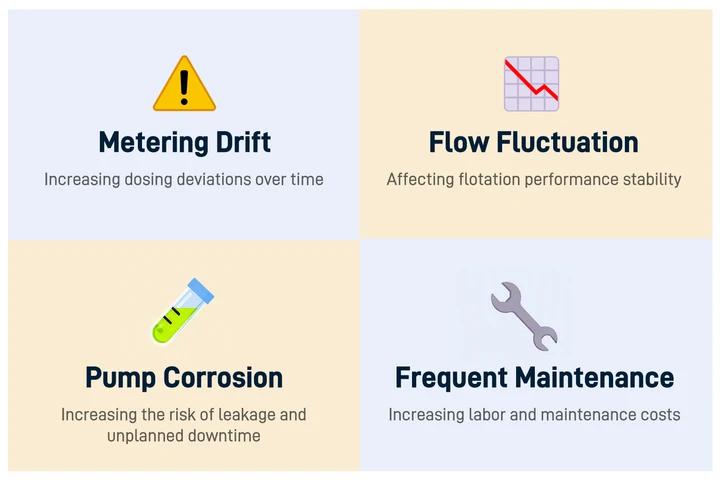
A single dosing deviation may seem insignificant, but accumulated day after day, it can ultimately affect critical indicators such as reagent consumption and recovery rate.
As mining operations continue to move toward automation and intelligent control, precise, stable, and low-maintenance dosing solutions are becoming essential for modern mineral processing plants.
Lead Fluid MF106 High-Protection Peristaltic Pump
A Precise Reagent Dosing Solution
Designed for the demanding conditions of mining flotation, the Lead Fluid MF106 High-Protection Peristaltic Pump provides reliable support for precise reagent dosing through its combination of high protection, corrosion resistance, precise metering, and automated control.
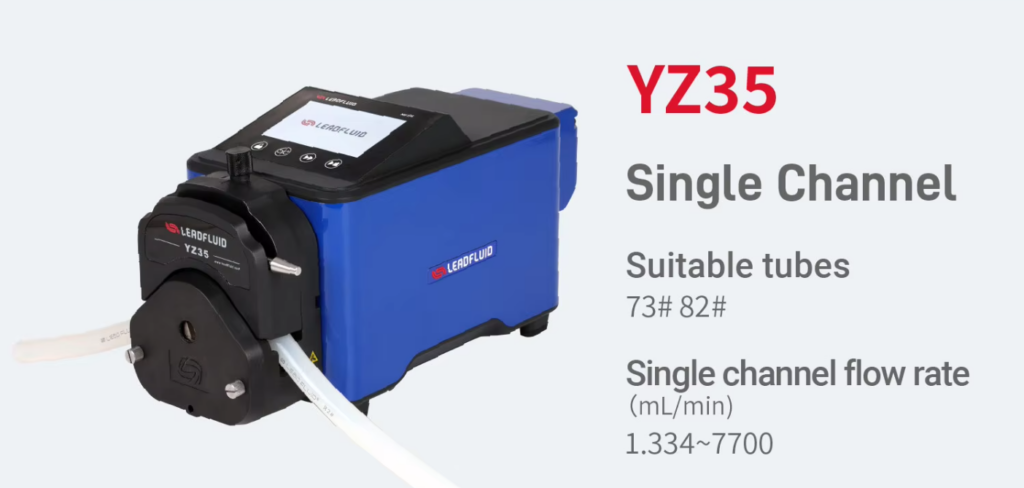
(MF106 +YZ35. For more pump head configurations and specifications, please contact Lead Fluid sales manager.)
01 High Protection Rating · Built for Harsh Environments
The complete unit provides protection ratings of up to IP66/IP67, effectively handling dust, moisture, and equipment washdown environments.
It is suitable for complex mining environments characterized by dust and humidity, helping ensure long-term, continuous, and stable operation.
02 Corrosion-Resistant Fluid Transfer
The reagent only contacts the inner surface of the tubing and does not come into direct contact with the pump body, helping minimize corrosion and leakage risks.
Suitable for the transfer of various flotation reagents.
03 Precise and Stable Metering
Fluctuations in reagent dosing can affect froth conditions and the stability of flotation performance.
The MF106 is equipped with a high-quality drive and control system, providing smooth flow output and high metering accuracy to meet the precise dosing requirements of flotation processes.
04 Automation-Ready Integration
Supports RS232, RS485 communication and the Modbus protocol, enabling integration with PLC, DCS, and other control systems to support the development of intelligent reagent dosing systems.
Real-World Results: Visible Cost Reduction and Efficiency Gains
Case 1: Gold Mining Project
The project involved continuous dosing of flotation reagents and required high dosing accuracy and equipment stability.
After adopting the Lead Fluid MF106 High-Protection Peristaltic Pump:
Reagent consumption reduced by 17%
Gold recovery rate increased by 2.3%
Case 1: Gold Mining Project
The project involved continuous dosing of flotation reagents and required high dosing accuracy and equipment stability.
After adopting the Lead Fluid MF106 High-Protection Peristaltic Pump:
Reagent consumption reduced by 17%
Gold recovery rate increased by 2.3%
Make Precise Reagent Dosing the “Hidden Gain” in Mining
Higher recovery rates do not always require major changes to the production process. Often, the opportunity lies in optimizing the details of every individual process step.
From experience-based manual dosing to automated precision dosing, and from gold mines to lead-zinc mines, an increasing number of mining companies are upgrading their dosing processes to unlock new opportunities for efficiency gains.
With its capabilities in precise metering, high protection, and stable and reliable fluid transfer, the Lead Fluid MF106 High-Protection Peristaltic Pump provides a proven solution for flotation reagent dosing, helping customers achieve three key objectives: Higher Recovery Rates · Lower Reagent Consumption · More Stable Production