
A patient walks into a hospital.
Before starting treatment, the doctor tells him:
“We need to grow another ‘you’ in the laboratory.”
Sounds a bit like science fiction, doesn’t it?
Of course, this does not mean creating an entire copy of a person. Instead, doctors obtain a small number of cells from the patient and cultivate a personalized “mini organ” in the laboratory. They then test different drugs on it to determine which treatment is most effective and which causes the fewest side effects before deciding which medication to prescribe.
In fact, this approach is already becoming a reality.
The technology behind it is the increasingly popular concept of organoids.
01 What Are Organoids?
Organoids are three-dimensional tissue models grown in vitro that can replicate certain structural and functional characteristics of specific organs or diseased tissues.
Today, organoids are widely used in disease modeling, drug screening, and precision medicine, providing life science researchers with more physiologically relevant tools for studying human biology and disease.
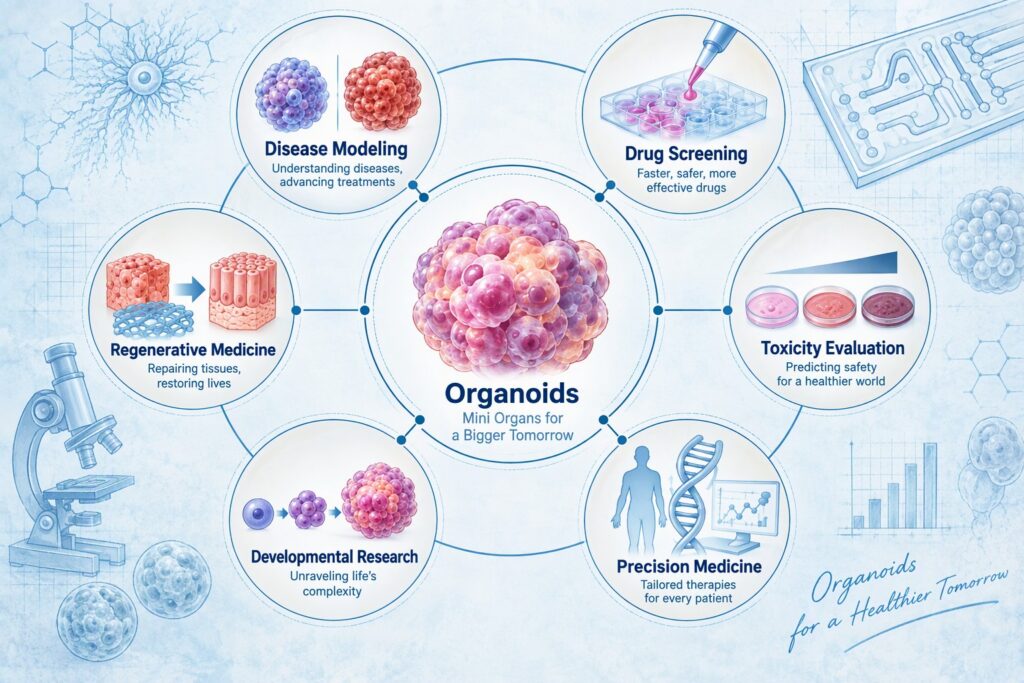
Illustration of Organoid Application Areas
02 When Organoids Meet Microfluidics
How are organoids actually cultivated?
How are nutrients continuously supplied?
How are metabolic waste products removed?
How are drugs and culture conditions precisely controlled?
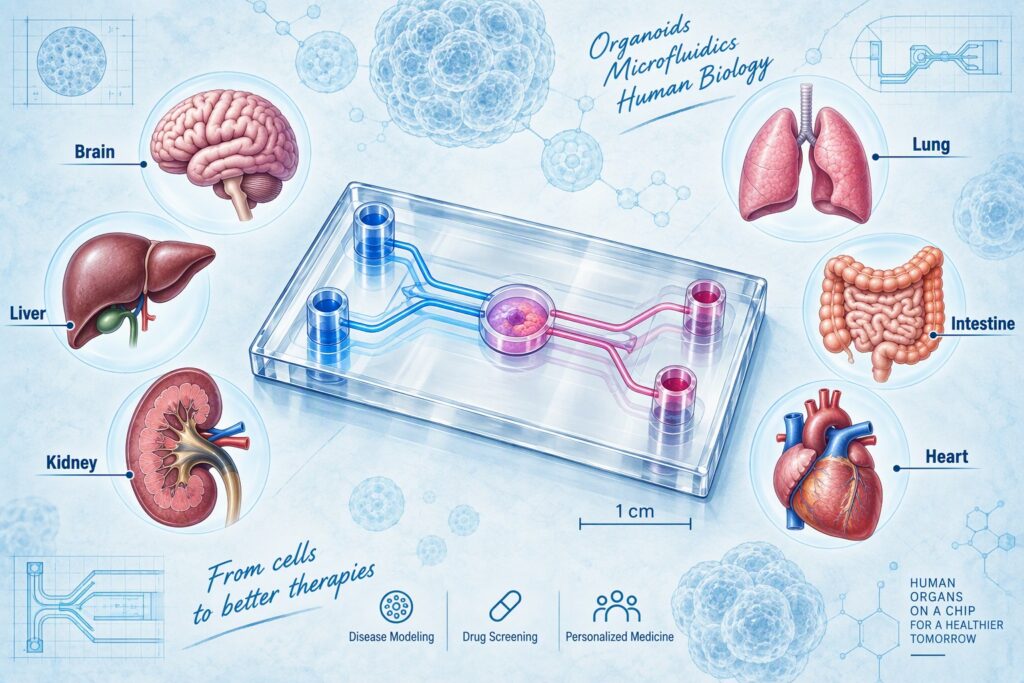
Organoid and Microfluidic Chip Illustration (for reference only)
To enable culture media to flow through microfluidic chips under predefined conditions, the perfusion module plays a critical role in the system.
Recently, Lead Fluid worked with a company developing organoid-on-chip platforms. The customer’s organoid microfluidic culture system required multi-channel culture medium delivery at a target flow rate of 0.5 μL/min, with a particular focus on two key requirements:
- Stable and controllable flow rates;
- High flow consistency across channels.
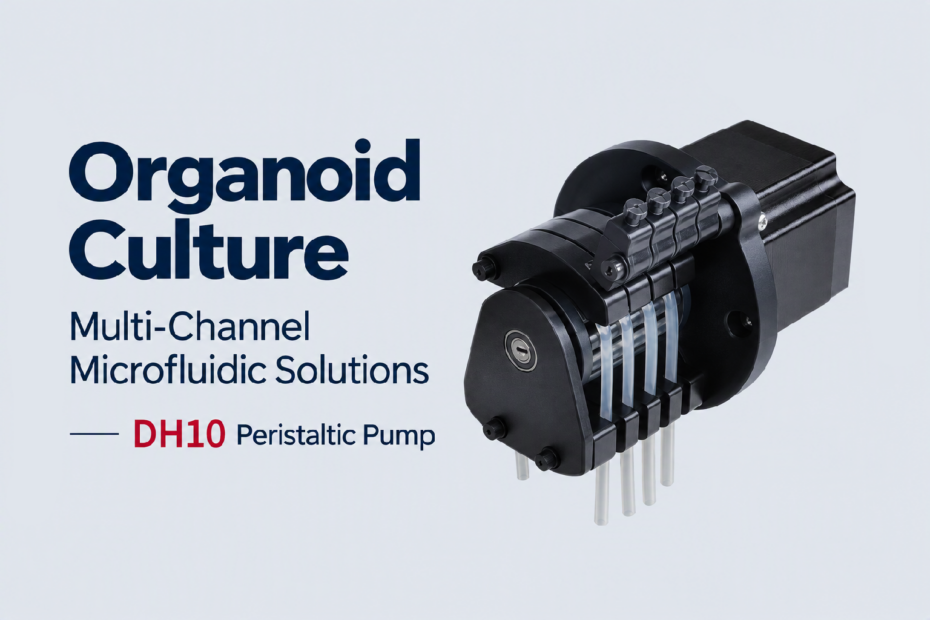
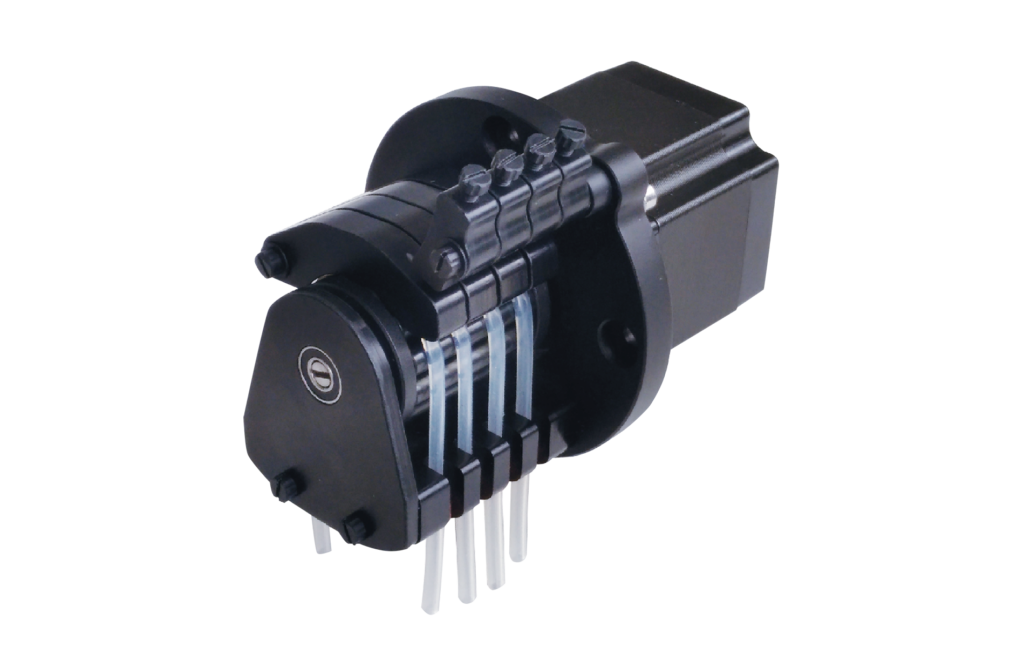
To meet these requirements, the Lead Fluid DH10 was selected to perform the multi-channel fluid delivery task within the system.
03 From Laboratory Infusion to Integrated Perfusion Systems
In microfluidic research laboratories, syringe pumps are widely used due to their high accuracy at low flow rates and convenience for experimental setups.
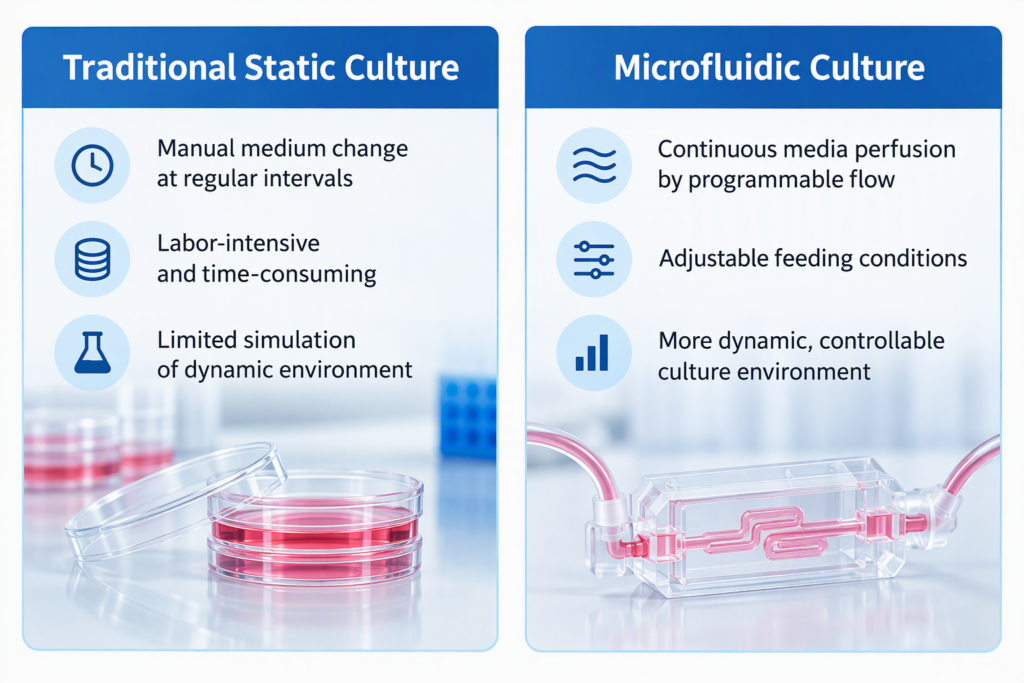
However, this project required an integrated multi-channel perfusion module that could be incorporated directly into a commercial device. Peristaltic pumps can be connected directly to culture media reservoirs and deliver fluids to multiple culture units through separate tubing lines, simplifying both fluid-path replacement and system integration.
Nevertheless, two challenges associated with peristaltic pumps still needed to be addressed:
- Flow pulsation
- Flow variations between channels
04 Lead Fluid Solution
• 12 Rollers for Smoother Low-Flow Delivery
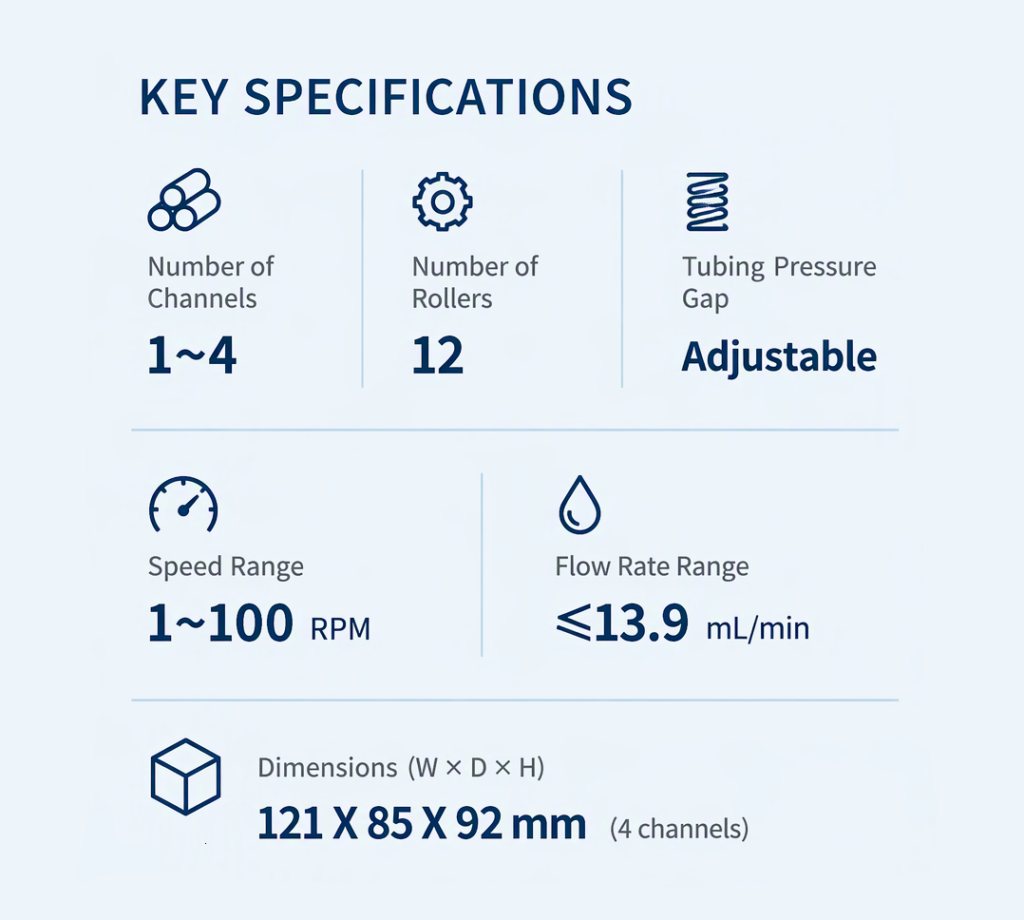
The DH10 features a 12-roller design, reducing the interval between consecutive tubing compressions. This creates a more continuous fluid flow, minimizes pulsation, and better meets the stable flow requirements of microfluidic chip applications.
• Independent Adjustment for Improved Multi-Channel Flow Consistency
Minor differences in tubing dimensions, elasticity, and installation conditions can affect the actual flow rate of each channel. To address this, every channel of the DH10 supports independent occlusion gap adjustment, allowing targeted compensation for individual tubing variations and improving flow consistency across channels.
Testing results show that flow rate deviation between channels can be controlled within ±1%.
• Spring-Loaded Occlusion Mechanism for Extended Tubing Life
The DH10 adopts a spring-loading occlusion mechanism, which automatically adjusts the tubing compression force through spring tension. This design ensures reliable fluid delivery while significantly extending tubing service life and reducing long-term maintenance costs.
• Compact Design for ODM Equipment Integration
With its compact structure, the DH10 can be paired with stepper motors and easily integrated into customer equipment according to specific installation spaces, control systems, and operational workflows. It is well suited for organoid-on-chip culture systems as well as other precision analytical and life science instruments.
Organoid-on-chip technology is continuously expanding the boundaries of life science research. The transition of breakthrough technologies from the laboratory to commercial instruments and industrial applications is never achieved through a single innovation. Every component within the system must evolve together.
For more than a decade, Lead Fluid has specialized in microfluidic and low-flow fluid transfer technologies. We are committed to working closely with customers in real-world application environments, understanding their unique challenges, and integrating practical fluid-handling solutions directly into their equipment and workflows.
Looking ahead, Lead Fluid will continue to leverage its extensive ODM customization experience and expertise in fluid transfer applications to provide customers with more targeted, reliable, and application-driven fluid delivery solutions.