
When it comes to semiconductor manufacturing, people often think first of highly sophisticated processes such as lithography and etching. However, before these nanometer-scale circuits can be formed, there is another critical step: polishing the wafer surface to an atomic-level flatness.
There is a saying within the industry:
“In chip manufacturing, 30% is process technology, 70% is cleaning, and ultimate polishing determines success.”
While somewhat exaggerated, it highlights the significance of cleaning and polishing.
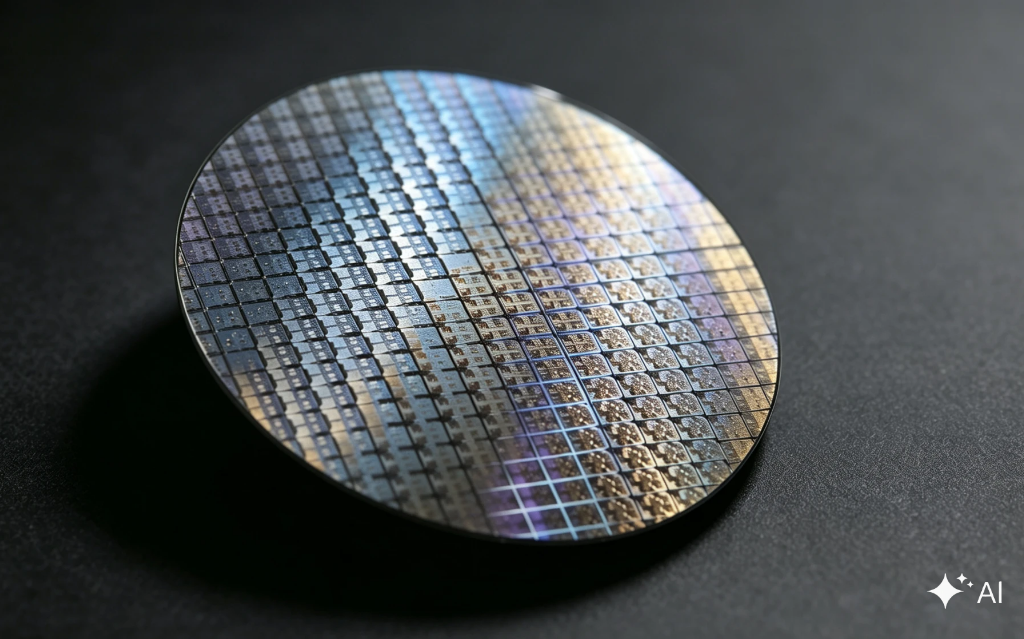
A wafer serves as the foundational substrate for semiconductor devices. After each deposition layer and wiring process, the wafer surface becomes uneven. Building chips is much like constructing a multi-story building: if one layer is not leveled properly, it becomes difficult to precisely build the next. Therefore, before subsequent processing, the wafer surface must be restored to a flat condition.
This critical technology is known as CMP (Chemical Mechanical Polishing).
How Does CMP Flatten a Wafer?
CMP is not simply about grinding away material. Instead, it combines chemical reactions and mechanical abrasion to polish the wafer surface and create an exceptionally flat foundation for subsequent manufacturing steps.
The process can be divided into two stages:
Chemical Softening
Chemical agents in the slurry react with the wafer surface, forming a softened layer that can be removed more easily.
Mechanical Removal
Abrasive particles, together with the relative motion and pressure between the polishing pad and the wafer, gradually remove the softened layer.
One mechanism modifies the surface, while the other removes material. Working together continuously, these processes progressively restore wafer planarity.
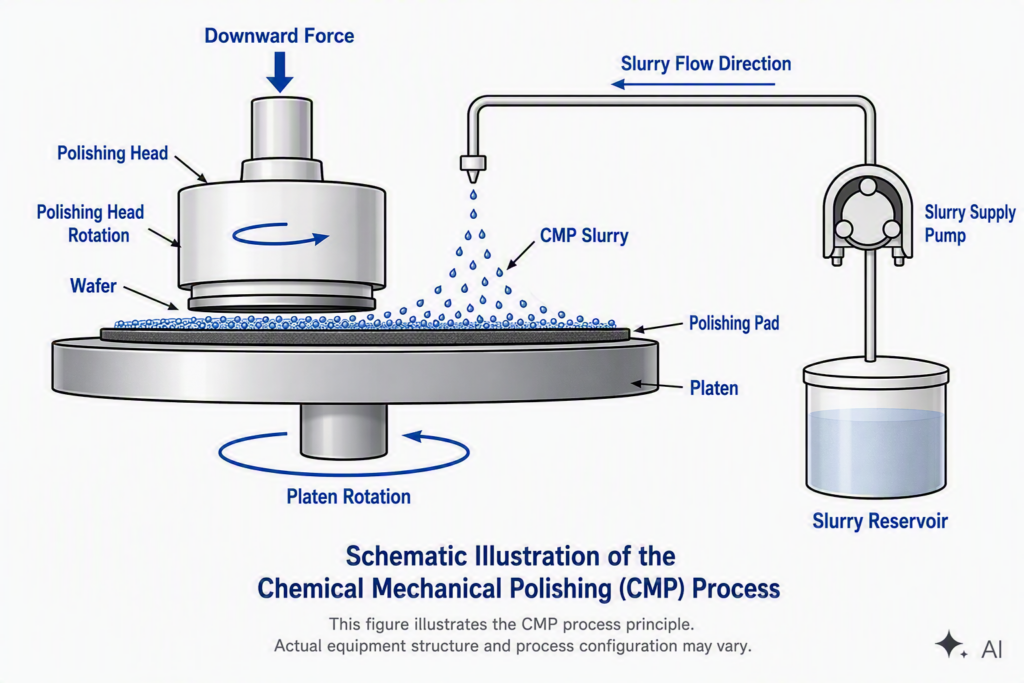
As integrated circuits are built layer by layer, CMP provides a smooth and level “foundation” for each subsequent step. During this process, the polishing slurry serves both as a carrier for chemical reactions and as a key medium for mechanical polishing. Its formulation, particle characteristics, and delivery consistency all have a direct impact on process performance.
A high-quality polishing slurry also requires a reliable delivery system.
Stability Comes First
CMP slurries are far from ordinary liquids. Depending on process requirements, they may contain abrasives, oxidizers, dispersants, and other components, placing greater demands on the delivery system.
01 Continuous Operation
Maintain uninterrupted slurry supply to avoid process interruptions.
02 Stable Flow
Minimize flow fluctuations to ensure consistent slurry delivery.
03 Media Compatibility
Ensure tubing and fluid-contact materials are compatible with the slurry.
Although stable slurry delivery is not the sole factor determining polishing performance, it is fundamental to maintaining a reliable fluid handling system. What appears to be a simple delivery task actually depends on the coordinated performance of the media, tubing, and pumping equipment.
WG600S + Pulse Dampener Solution
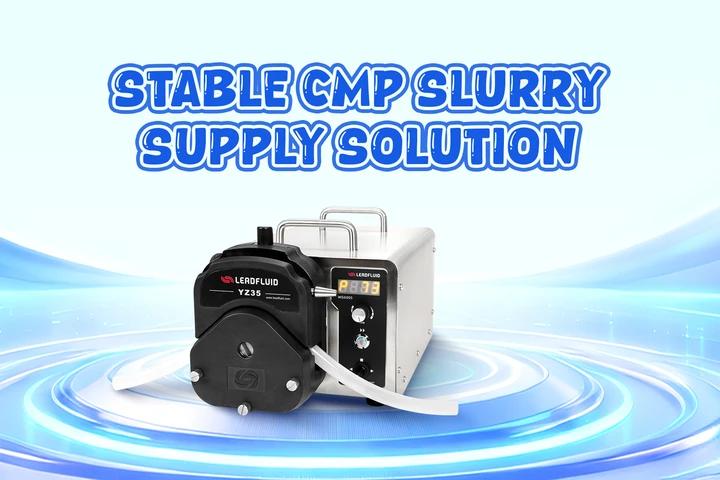
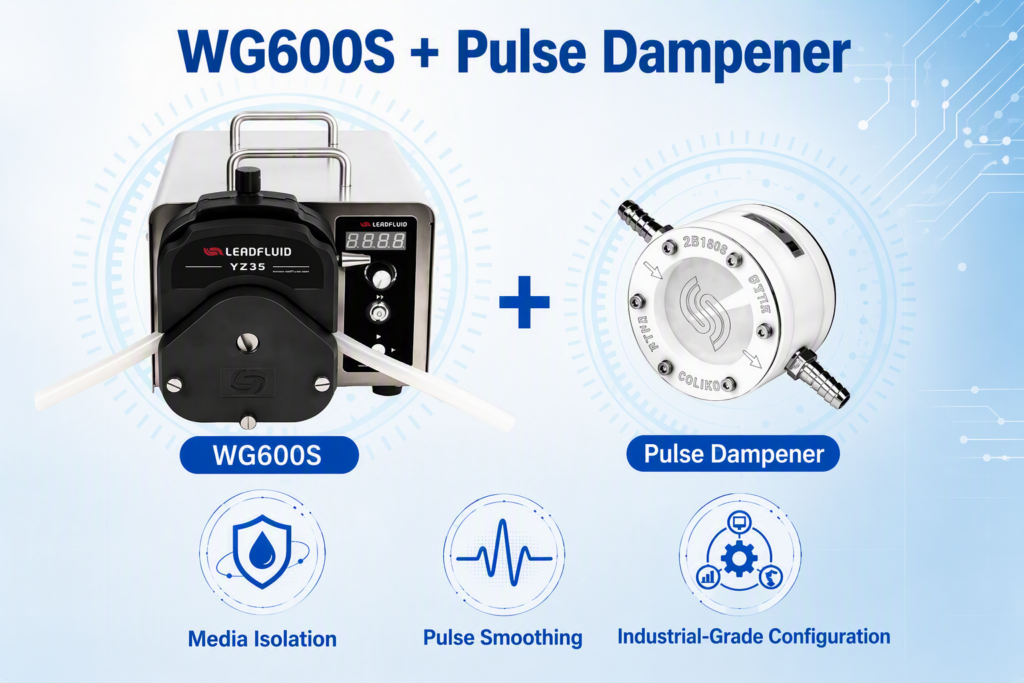
To meet the customer’s requirements, Lead Fluid implemented a solution featuring the WG600S Industrial Speed-Control Peristaltic Pump combined with a Pulse Dampener, enabling continuous and stable slurry transfer.
Media Isolation for Easier Maintenance
During operation, the polishing slurry flows only through the pump tubing and never comes into direct contact with the pump body or mechanical drive components, reducing unnecessary media exposure.
Compatible tubing can be selected according to slurry characteristics, and routine maintenance typically requires only tubing inspection or replacement, making servicing straightforward and efficient.
Pulse Reduction for Smoother Flow
To address the inherent pulsation generated during peristaltic pump operation, a pulse dampener is installed at the outlet of the WG600S. This device absorbs instantaneous flow fluctuations, delivering a smoother and more consistent slurry flow into downstream process lines.
Industrial-Grade Configuration for Automated Production Lines
The WG600S supports external signal control for start/stop, direction, and speed adjustment. It also features an RS485 communication interface and MODBUS protocol, enabling seamless integration with PLCs, HMIs, and supervisory control systems.
In addition, its brushless servo motor drive and stainless-steel housing make it well suited for demanding industrial environments.
From the storage tank to the point of use, even minor fluctuations at any stage of the fluid delivery process can ultimately manifest as wafer surface defects. Through the combination of the WG600S and a Pulse Dampener, Lead Fluid addresses CMP slurry delivery challenges directly, reducing operational risks while providing more stable and continuous fluid transfer.
The precision of semiconductor manufacturing starts with the stability of every microscopic process.