
Have you ever experienced this:
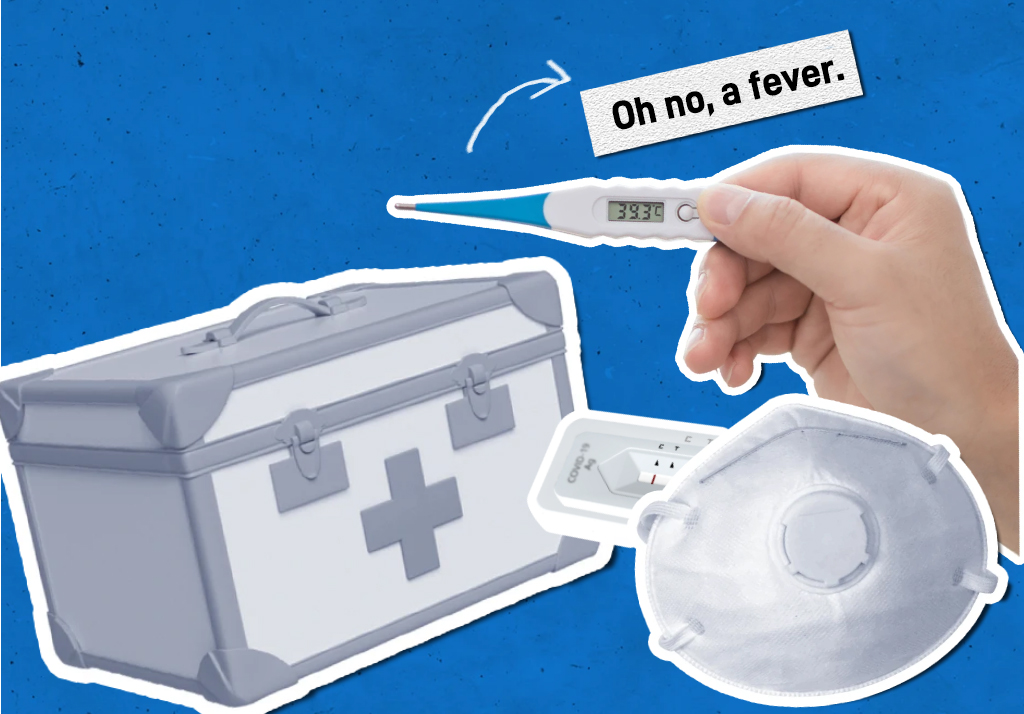
➡️ Your child has a fever—common cold, influenza A or B?
In the past, you had to go to the hospital, but now many parents’ first reaction is to use a small testing kit at home.
➡️During a health check, the doctor uses a compact device and prints the report on site—no need to wait until tomorrow.
These increasingly common scenarios represent the essence of POCT (Point-of-Care Testing).
What is POCT?
Traditional testing requires sending samples to centralized laboratories, taking hours or even a day to receive results.
POCT (point‑of‑care testing) aims for “testing nearby, results quickly,” transferring laboratory capability from large centers to clinics, pharmacies, community facilities, and even home settings—enabling faster medical decisions for doctors and patients.
01 Molecular POCT
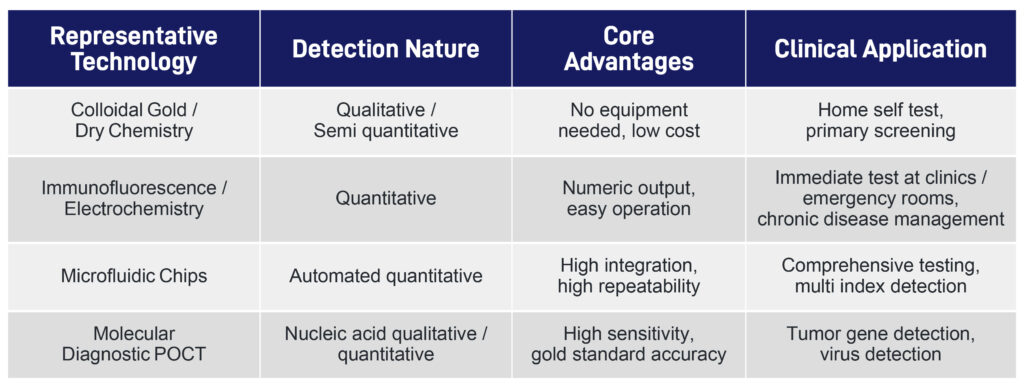
Early POCT mainly focused on qualitative detection—one line or two. As clinical diagnostics shift from “yes/no” (qualitative) to “how much” (quantitative), POCT technology has evolved from immunofluorescence and microfluidics to more advanced molecular POCT, integrating laboratory‑level nucleic‑acid extraction and amplification into compact instruments to achieve truly automated, sealed, and precise “sample‑in, result‑out” detection.
The core challenge of molecular POCT lies in translating laboratory‑grade accuracy into portable instruments. Among these transformations, the precision of reagent dispensing is a key factor. The pre-filled liquid or lyophilized reagents used in molecular POCT are usually only 10-120 µL per dose. At this micro‑scale, even subtle deviations in precision, uniformity, or cleanliness can significantly impact sensitivity, specificity, and repeatability—affecting the reliability of diagnostic results.
02 Lead Fluid Solution: WSP3000
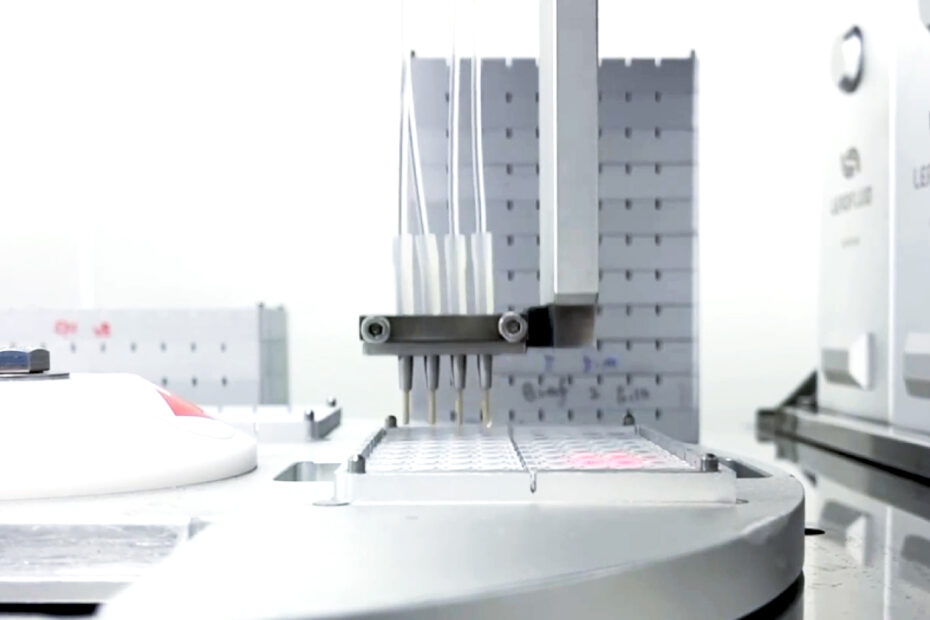
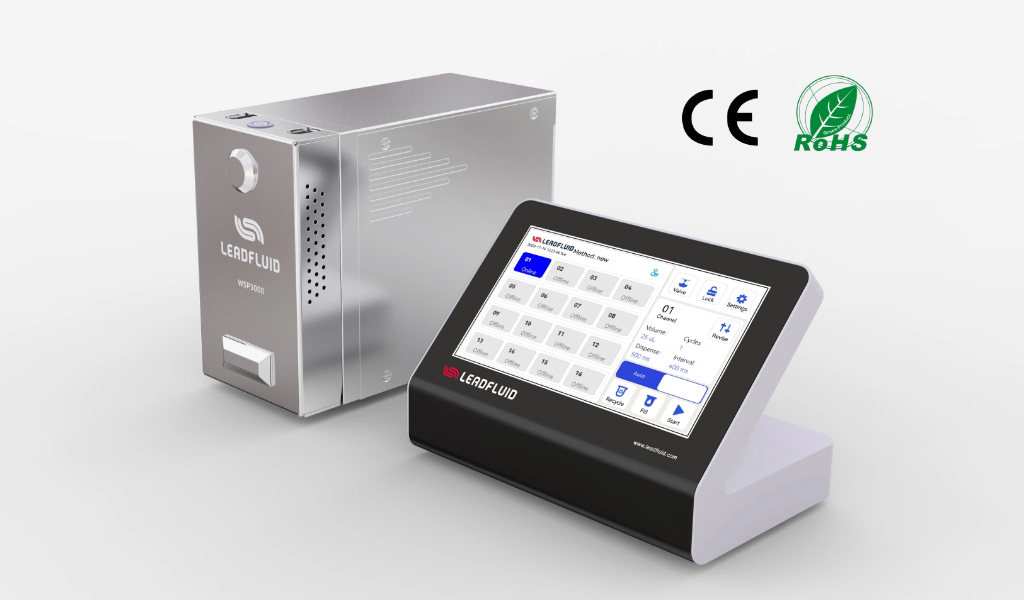
In Hangzhou, a high‑tech company specializing in molecular POCT has adopted Lead Fluid WSP3000 micro-volume peristaltic pumps on its production line for high‑precision reagent dispensing.

01 Microliter‑level Precision
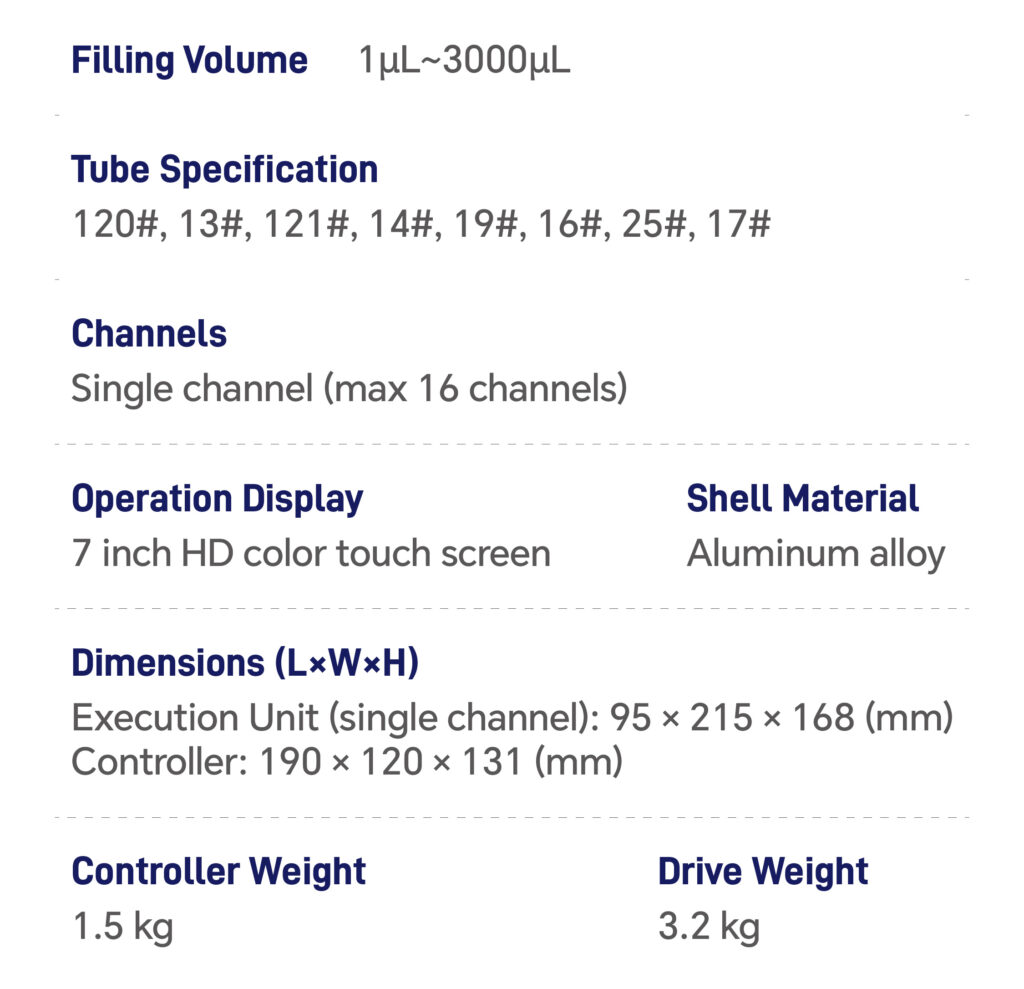
Driven by a high‑precision stepper motor with an innovative control algorithm, the WSP3000 covers 1–3000 µL with a filling accuracy of ±1 % (e.g., ±1 µL at 100 µL volume), ensuring precision and uniformity from the source.
02 Low Pulsation and Consistency
Featuring multi‑roller positioning and a spring-loaded tube clamp design, pulsation is effectively reduced. Internal testing shows volume attenuation < 1 % after 12 hours of continuous operation—superior to traditional peristaltic pumps (typically > 5 %), minimizing calibration downtime.
03 Efficiency Boost
While maintaining precision, the WSP3000 achieves up to 120 fills per minute (depending on medium and line configuration). Multiple units can be cascaded for large‑scale production.
04 Clean and Contaminant-Free
The fluid contacts only the tubing, forming a sealed flow path that prevents cross‑contamination. The smooth pipeline supports CIP (Clean‑in‑Place) and SIP (Sterilize‑in‑Place) operations; the pump surface is hygienic, easy to clean and disinfect, fully meeting GMP requirements.
05 Smart Control,Simplified Operation
• Supports both manual and automated operation for seamless integration into automated lines;
• Intuitive UI, three‑level user management, USB recipe import/export, and firmware updates—all simplifying maintenance and ensuring compliant traceability.
06 Gentle Transfer
Soft pumping motion suits magnetic‑bead solutions and biological formulations, avoiding shear‑induced damage to active ingredients and maintaining stability.
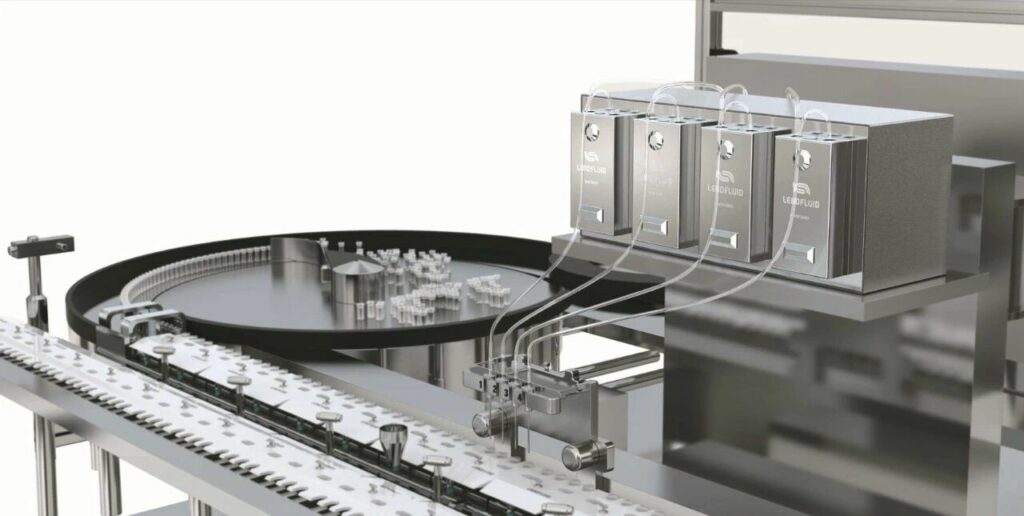
These scenario‑oriented design features make WSP3000 a reliable choice for high-end reagent dispensing applications. Precision filling at the front end lays the foundation for stable performance at the clinical end—choosing a professional core component is the key for industry leaders to build long‑term competitiveness.
In the grand narrative of precision medicine, every small step forward represents a significant stride toward patient benefit.
Lead Fluid will continue to advance with its partners through reliable precision-fluid technologies, exploring more possibilities in production and innovation.