
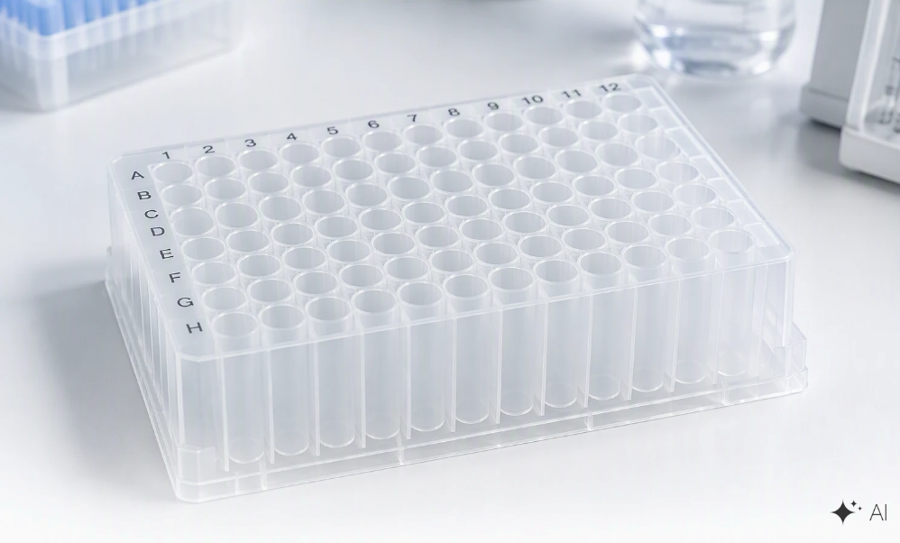
When people think of 96-well plates, laboratories often come to mind first.
However, in the manufacturing of IVD (In Vitro Diagnostic) reagents, 96-well plates are also widely used for preloading different reagents. According to process requirements, multiple reagents are dispensed into designated wells in advance, sealed, and then paired with nucleic acid extraction instruments or automated workstations.
For end users, this eliminates the time-consuming tasks of manual reagent preparation and dispensing. But from a manufacturing perspective, it introduces a new challenge:
How can manufacturers accurately and efficiently dispense multiple reagents with different fill volumes into 96 wells while maintaining both cleanliness and continuous production?
A life sciences company encountered exactly these common challenges when upgrading its existing 96-well plate reagent prefill production line.
Why Not Use Automated Pipetting?
At the beginning of the project, the customer considered an automated pipetting solution, which is often regarded as the gold standard for laboratory efficiency. However, after evaluating the actual production requirements, several limitations became apparent.
Complex Changeover Procedures
The production line needed to handle multiple reagents. Every material changeover required extensive cleaning and disinfection of the fluid pathways, increasing downtime and operational complexity.
Insufficient Dispensing Throughput
The dispensing efficiency of automated pipetting systems could not meet the increased production capacity targets following the planned line upgrade.
After a comprehensive evaluation, the customer ultimately selected 12 LEADFLUID HSP3000 Syringe Pumps to form a multi-channel dispensing system.
HSP3000 Helps Upgrade the Dispensing Production Line
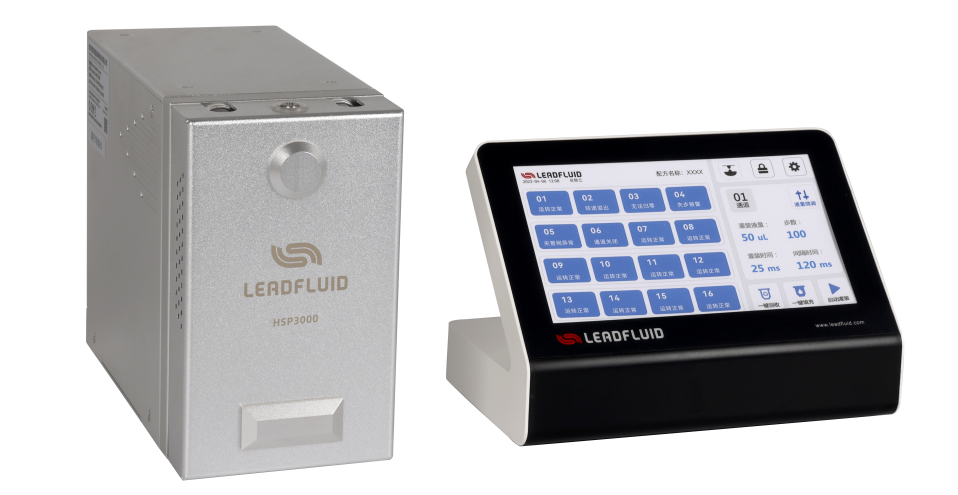
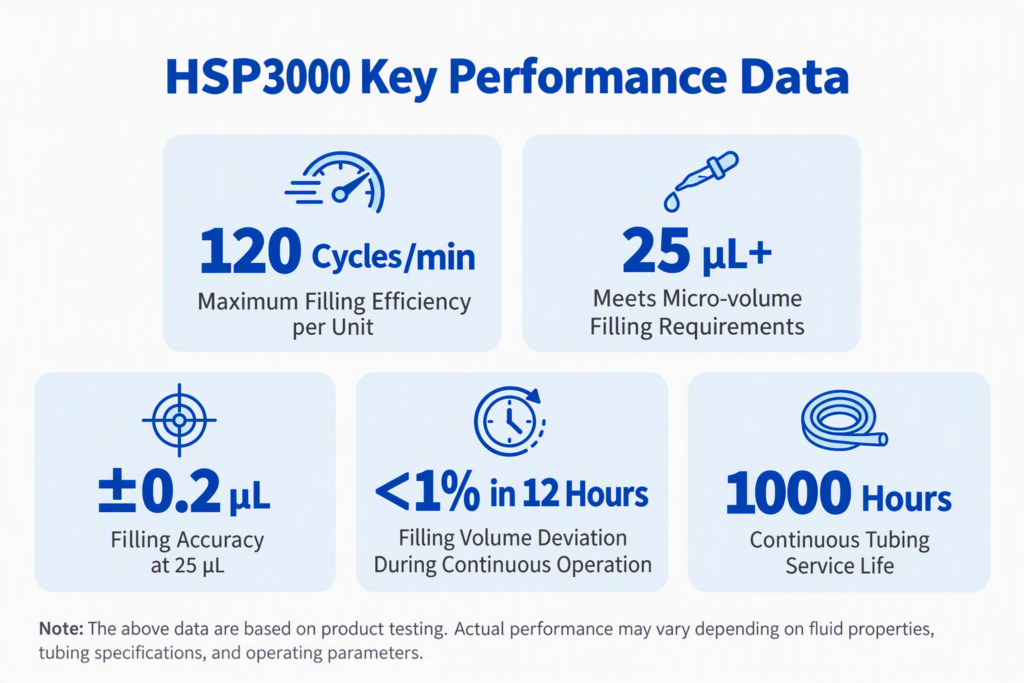
12 Independent Channels for Multi-Reagent and Variable-Volume Dispensing
Within a single 96-well plate, different reagents often need to be dispensed into specific wells, with each well requiring a different dispensing volume.
A system composed of 12 HSP3000 units forms 12 independent dispensing channels. Each channel can be configured individually or operated simultaneously, enabling precise well-specific dispensing to meet complex assay requirements.
Efficient Dispensing with Stable Continuous Operation
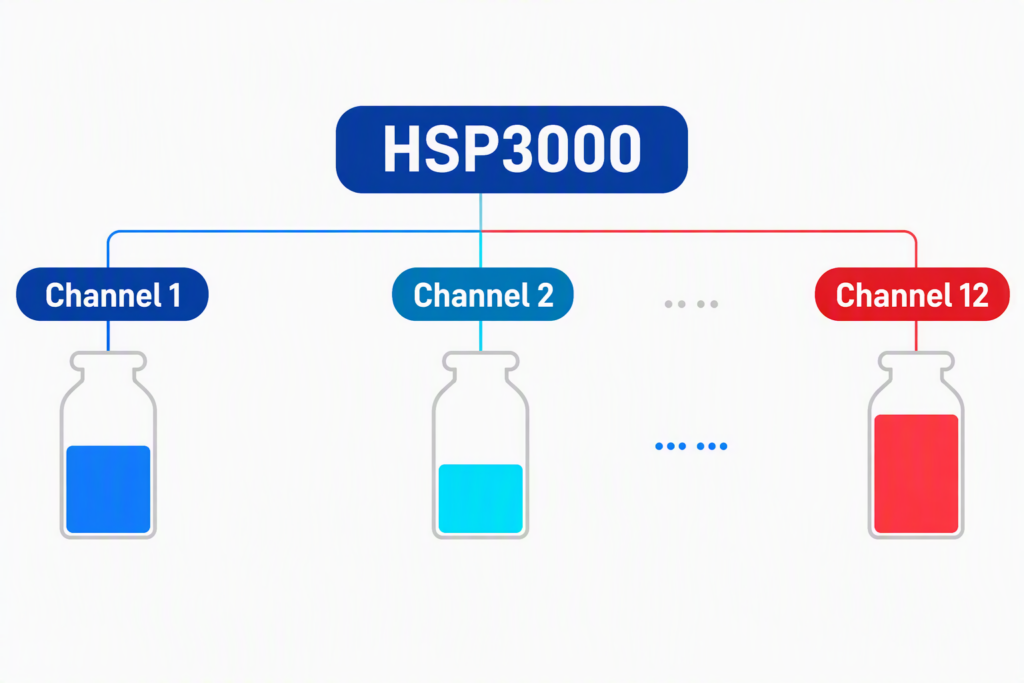
A single HSP3000 can achieve a dispensing speed of up to 120 cycles per minute. The 12 dispensing channels correspond to the 12 wells in a single row of a 96-well plate. With high-speed performance on each individual channel and simultaneous operation across multiple channels, the system significantly reduces the overall filling time for an entire plate.
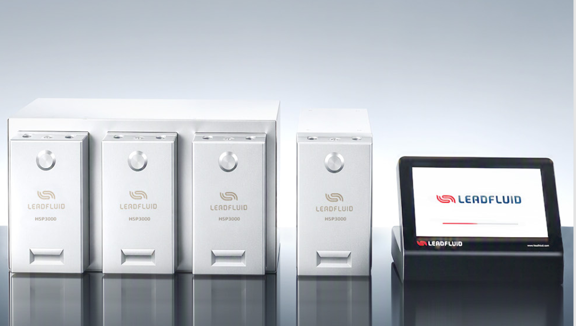
HSP3000 Modular Configuration
The HSP3000 features a modular design that can be flexibly configured to meet different production requirements.
The pump tubing offers a continuous service life of up to 1,000 hours, with a filling volume attenuation of less than 1% during 12 hours of continuous operation. This minimizes the need for frequent tubing replacement, recalibration, and maintenance-related downtime.
Easy Product Changeover with CIP and SIP Support
The HSP3000 uses tubing-based fluid transfer. When changing products, operators only need to replace the corresponding tubing, making product changeovers fast and convenient.
Its spring-loaded tube retention mechanism allows quick and easy tubing installation and removal, facilitating cleaning and sterilization. The system also supports Clean-in-Place (CIP) and Sterilization-in-Place (SIP) processes, reducing turnaround time between different production batches.
Accurate Micro-Volume Dispensing Starting from 25 μL
The HSP3000 offers a dispensing range of 25–3000 μL, covering a wide variety of filling volume requirements while maintaining excellent dispensing accuracy and repeatability.
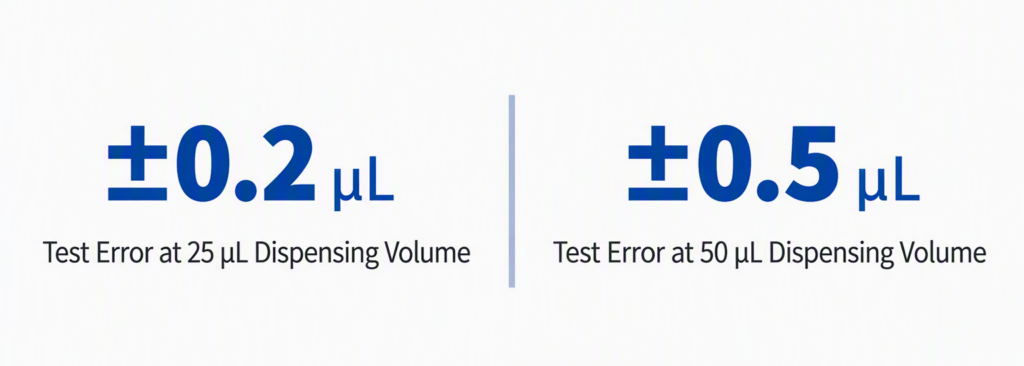
For More Experimental Data, Please Contact a Lead Fluid Sales Representative
Small Details That Make Production Easier
Intuitive Parameter Setup: Target dispensing volume, dispensing time, and cycle count can all be configured directly. When products or dispensing volumes change, simply update the settings accordingly.
Production Traceability: Features such as three-level user access management, recipe storage and retrieval, and channel operation log tracking help streamline daily production management and ensure process traceability.
Clean and Precise Dispensing: The suck-back function, combined with hydrophobic dispensing needles, minimizes dripping and residual liquid carryover at the end of each dispensing cycle.
From liquid handling in the laboratory to multi-channel dispensing on the production line, dispensing equipment today must do more than simply transfer liquids. It must also meet the demands of high efficiency, operational stability, and continuous production.
The HSP3000 modular fluid handling solution integrates micro-volume dispensing accuracy, clean process control, and production-line throughput optimization into a unified process design. This enables equipment configurations that better align with IVD manufacturing workflows, ensuring stable, controllable, and efficient reagent dispensing into 96-well plates.
If you are looking for a solution for micro-volume dispensing, multi-channel filling, or automated production line integration, we invite you to contact Lead Fluid for more information.