
With the continuous development of scientific research, laboratories are placing higher demands on the precision, stability, and safety of liquid transfer equipment. Peristaltic pumps have become widely used in biology, chemistry, pharmaceuticals, and other laboratory settings due to their advantages, including contamination‑free transfer, strong controllability, and easy maintenance. So, how should laboratories select the right peristaltic pump?
First, it is essential to clarify the experimental requirements. Different applications may require different flow ranges, transmission accuracy, and compatibility with various liquid properties. For example, biological experiments often require contamination‑free liquid handling, making closed-tubing peristaltic pumps the ideal choice. In chemical reaction control, flow stability becomes the key factor, requiring equipment with high-precision adjustment capabilities. As a brand with extensive technical expertise in the industry, Lead Fluid offers peristaltic pumps that cover a wide range of applications—from micro‑flow to high‑flow—meeting diverse laboratory needs.
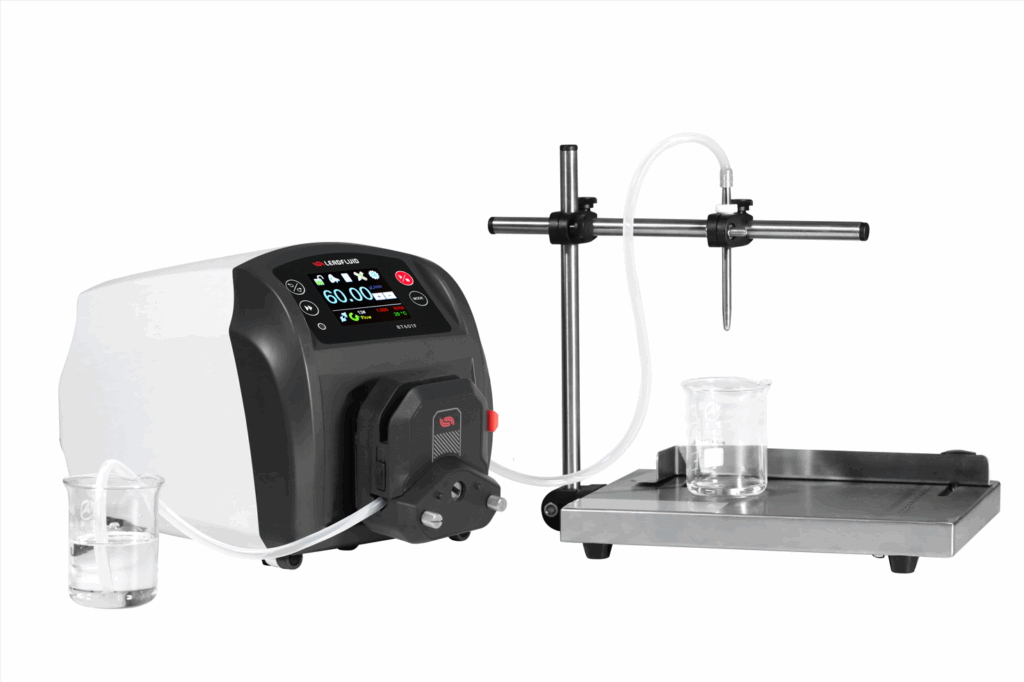
Second, attention should be given to pump head and tubing compatibility. The pump head material, structural design, and tubing resistance to corrosion directly affect the pump’s lifespan and stability. Selecting products with multi‑pump‑head compatibility and quick‑change designs can significantly improve laboratory efficiency. For instance, Lead Fluid provides multi‑channel peristaltic pumps that allow fast switching of pump heads and tubing, making them suitable for complex experimental environments.
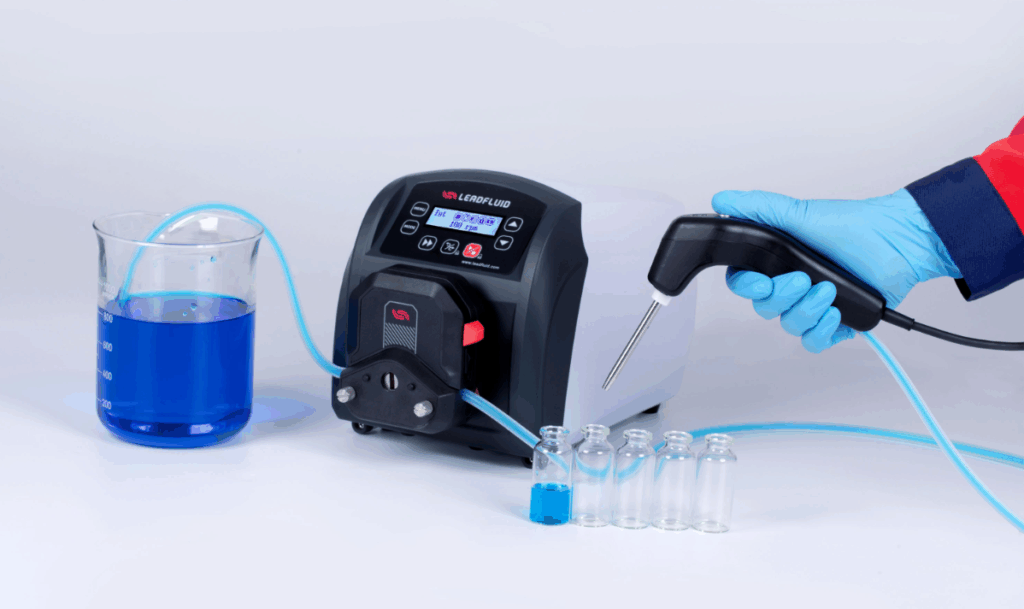
In addition, operation experience and the level of intelligent control have become increasingly important in modern laboratories. Features such as digital control panels, automatic calibration, and external control interfaces can greatly enhance user convenience and reduce human error. For long‑term continuous operation, equipment stability and noise level are also critical considerations.
Lastly, brand reputation and after‑sales support play an important role. Manufacturers with strong R&D capabilities and comprehensive service systems can offer more professional selection guidance and long‑term technical support for laboratories.
Overall, selecting a laboratory peristaltic pump requires a comprehensive evaluation of experimental needs, configuration, performance, and service quality. With ongoing technological advancements, high‑quality domestic brands such as Lead Fluid are providing laboratories with more precise, reliable, and intelligent fluid handling solutions.