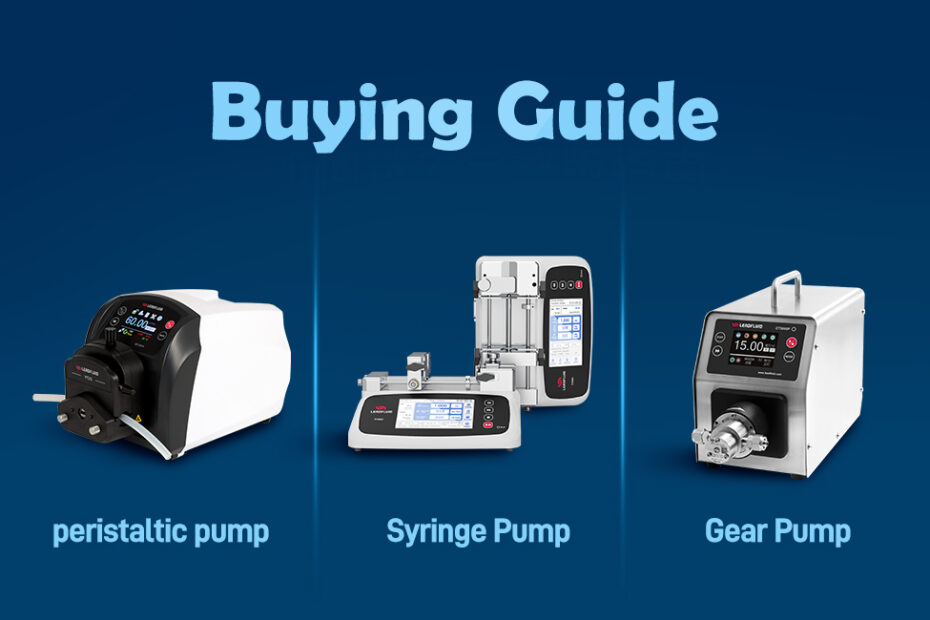
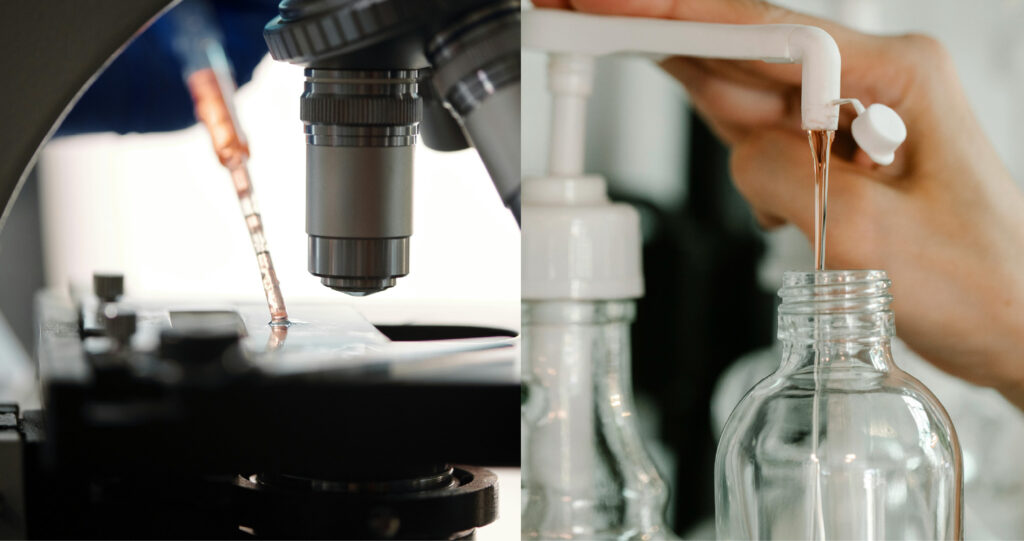
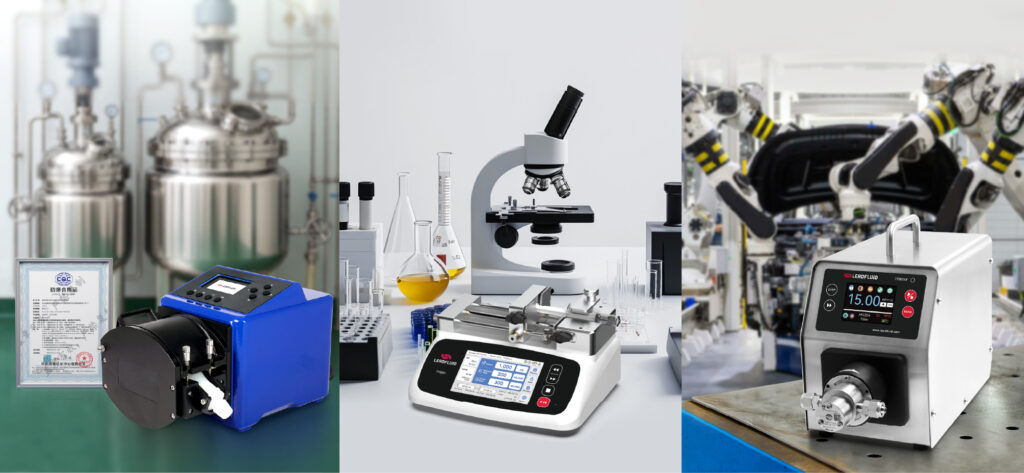
Peristaltic pumps, syringe pumps, and gear pumps are three commonly used precision fluid transfer devices. They are widely applied in laboratories, pharmaceuticals, food processing, and industrial production.
Each pump type has distinct differences in flow control, accuracy, fluid compatibility, and application scenarios. In this guide, we compare their working principles, performance characteristics, and selection criteria to help you choose the most suitable fluid transfer solution.
1. Working Principles
Understanding the operating principle is the first step in pump selection:
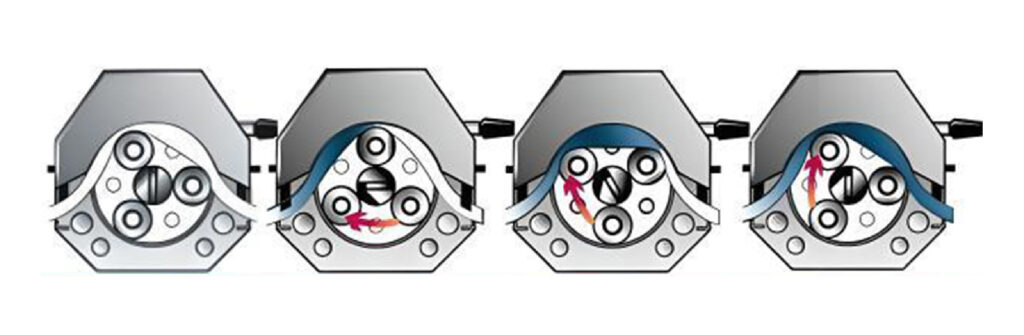
This image is sourced from the Internet
Peristaltic Pump Transports liquid by periodically compressing a flexible tube with rollers. The fluid only contacts the tubing, ensuring contamination-free transfer.
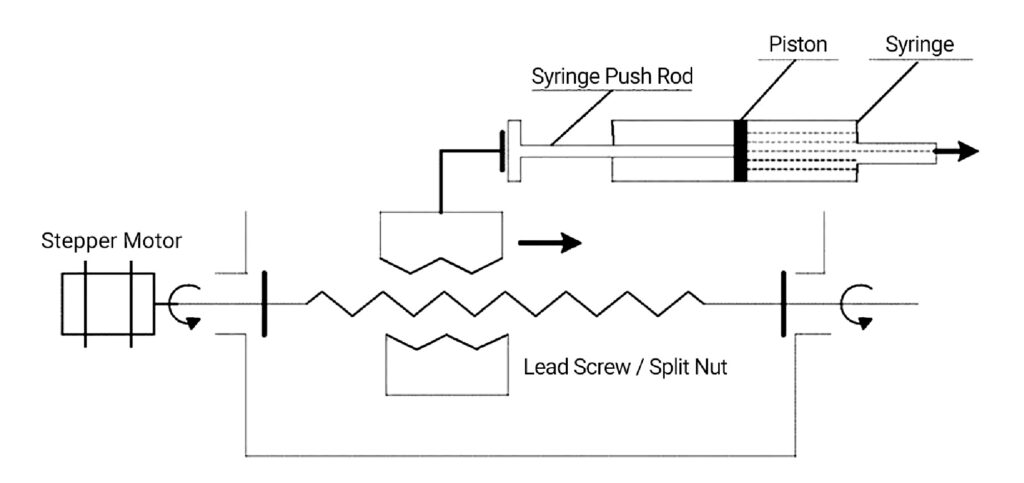
This image is sourced from the Internet
Syringe Pump Uses a motor-driven piston to push liquid from a syringe, enabling precise and quantitative fluid delivery.
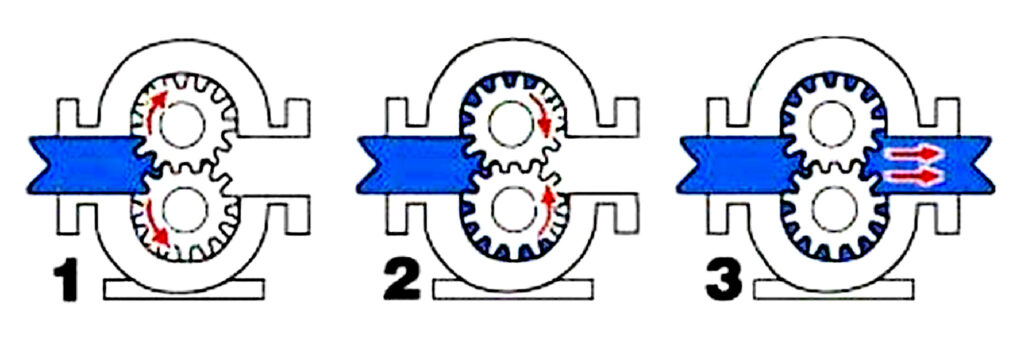
This image is sourced from the Internet
• Gear Pump Uses the meshing of gears to create volume changes, providing continuous and stable fluid transfer with relatively high pressure.
2. Key Performance Comparison
This image is sourced from the Internet
2.1 Flow Rate Range
Syringe Pump Designed for ultra-low flow rates (nL and μL levels), ideal for laboratory and research applications.
Peristaltic Pump Offers a wide flow range, covering μL, mL, and even L levels, suitable for continuous and stable operation.
Gear Pump Provides stable flow mainly in the mL range (for small models), also suitable for continuous operation.
2.2 Fluid Compatibility
Peristaltic Pump Suitable for corrosive, sensitive, or particle-containing fluids.
Syringe Pump Best for clean, low-viscosity, high-precision liquids.
Gear Pump Ideal for high-viscosity fluids without particles.
👉 Thanks to its “no-contact” design (fluid only touches the tubing), peristaltic pumps are widely used in food, pharmaceutical, and biotech industries.
This image is sourced from the Internet
2.3 Continuity & Pressure Capability
Peristaltic Pump Supports continuous operation but with limited pressure, typically used in low-pressure systems.
Syringe Pump Not suitable for continuous operation, limited by syringe volume.
Gear Pump Provides high pressure and stable continuous flow.
3. How to Choose the Right Pump (Selection Guide)
When selecting a pump, focus on these four key factors:
3.1. Is contamination-free transfer required?
If yes → Choose a Peristaltic Pump (Best for food, pharmaceutical, and laboratory applications)
3.2. What flow rate is required?
Choose the pump type based on your required flow range.
3.3. Is the fluid highly viscous?
If yes → Choose a Gear Pump (Suitable for oils, resins, and adhesives)
3.4. Is continuous operation required?
Prefer Peristaltic Pumps or Gear Pumps
Lead Fluid Solutions
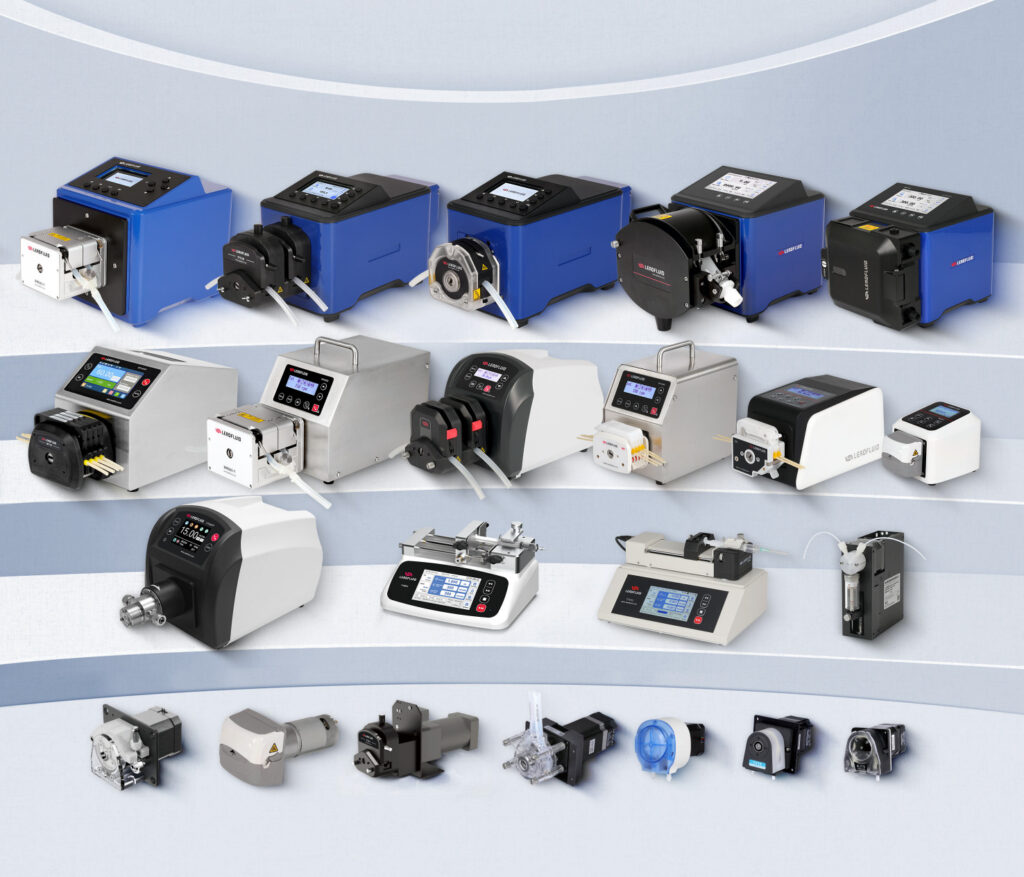
With over a decade of experience, Lead Fluid is a professional manufacturer specializing in precision fluid transfer solutions, including peristaltic pumps, syringe pumps, gear pumps, and ODM pump systems.
We provide comprehensive solutions ranging from laboratory to industrial applications: