
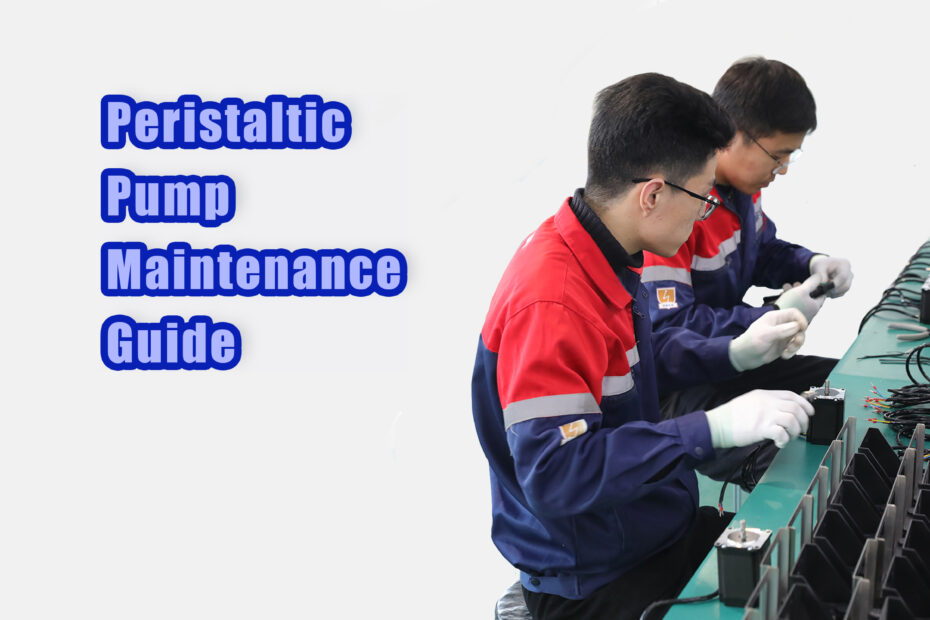
Peristaltic pumps, known for their high precision and contamination-free fluid transfer, are widely used in pharmaceutical, food, chemical, and environmental industries. With a simple structure and easy maintenance, they require proper care to ensure long-term stable operation. This article shares key maintenance tips from three aspects: daily inspection, critical component care, and common troubleshooting.
Daily Inspection: The First Step to Prevent Failures
The core of peristaltic pump maintenance lies in daily checks. Before each start-up, observe whether the pump head runs smoothly and whether the motor shows abnormal noise or overheating. During operation, monitor flow stability to avoid uneven transfer caused by hose aging or pipeline blockage.
Hose replacement is a crucial part of peristaltic pump maintenance. Since hoses are continuously compressed, they tend to fatigue and deform. It is recommended to inspect them regularly based on usage frequency and replace immediately if cracks or hardening appear to ensure accurate delivery.
Critical Component Care: Extend Equipment Life
The pump head consists of rollers and pressure blocks, which can cause bearing wear over time. Regular lubrication or bearing replacement is advised to reduce excessive friction on hoses and prolong the pump’s service life.
The motor and drive system are key areas for peristaltic pump maintenance. Check motor temperature and operating current regularly to prevent overload. For smart peristaltic pumps, keep the control panel and sensors clean to avoid dust or liquid intrusion that could affect accuracy.
Common Troubleshooting: Quick Checks to Minimize Downtime
- Unstable flow: Inspect hoses for aging or improper installation; check if pump head rollers are stuck.
- Abnormal pump speed: Verify motor drive parameters and ensure the control system is functioning properly.
- Excessive noise: Likely due to worn roller bearings or loose pump head installation; adjust or replace promptly.
These troubleshooting tips help companies quickly restore production and reduce downtime losses.
Recommended Maintenance Schedule
- Daily: Check hose condition and clean the pump head.
- Monthly: Inspect pump head rollers and lubricate bearings.
- Every six months: Perform a comprehensive check of the motor, drive system, and control panel.
Conclusion
Proper peristaltic pump maintenance not only extends equipment life but also ensures production stability. Companies should establish a scientific maintenance plan tailored to actual operating conditions, following the principle of “prevention first, maintenance second,” to keep peristaltic pumps running at their best.